What makes an assessment formative?
It is formative when the evidence is used to adapt teaching or learning rather than only to record a final result.
EdAuthor activity template
A useful formative assessment does more than count correct answers. It reveals how learners are reasoning, makes uncertainty discussable and gives the host evidence for choosing the next teaching move.
Learners are planning a seedling experiment. The teacher pauses for a short check, listens to the reasoning, then asks a related question.

Let everyone answer before discussing the options. A plausible wrong answer is an invitation to investigate.
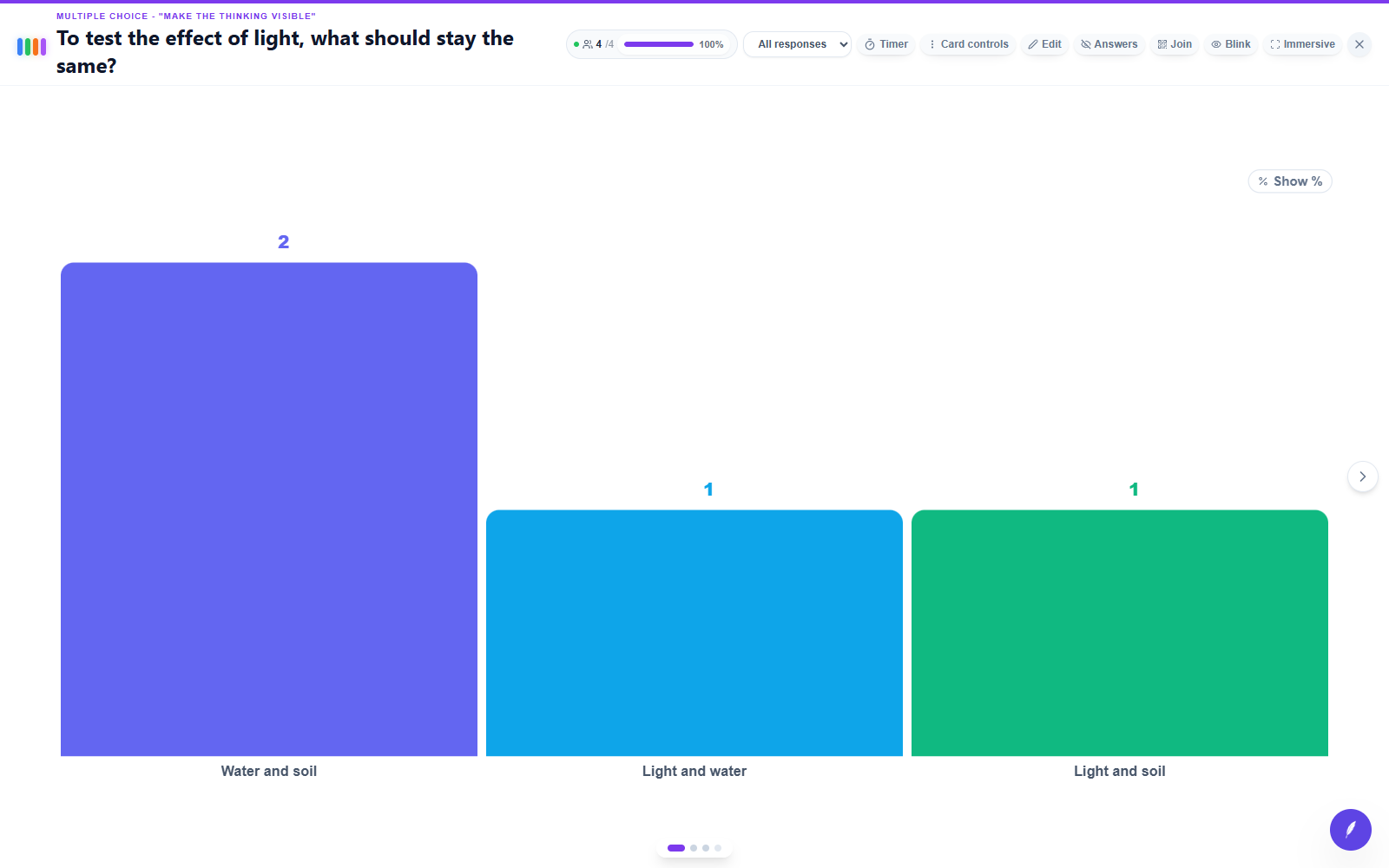
The first vote is mixed. Some learners are changing more than the variable they want to test.
Ask for the reasoning behind the choice. Use a concrete example to separate the factor being tested from the conditions kept constant.
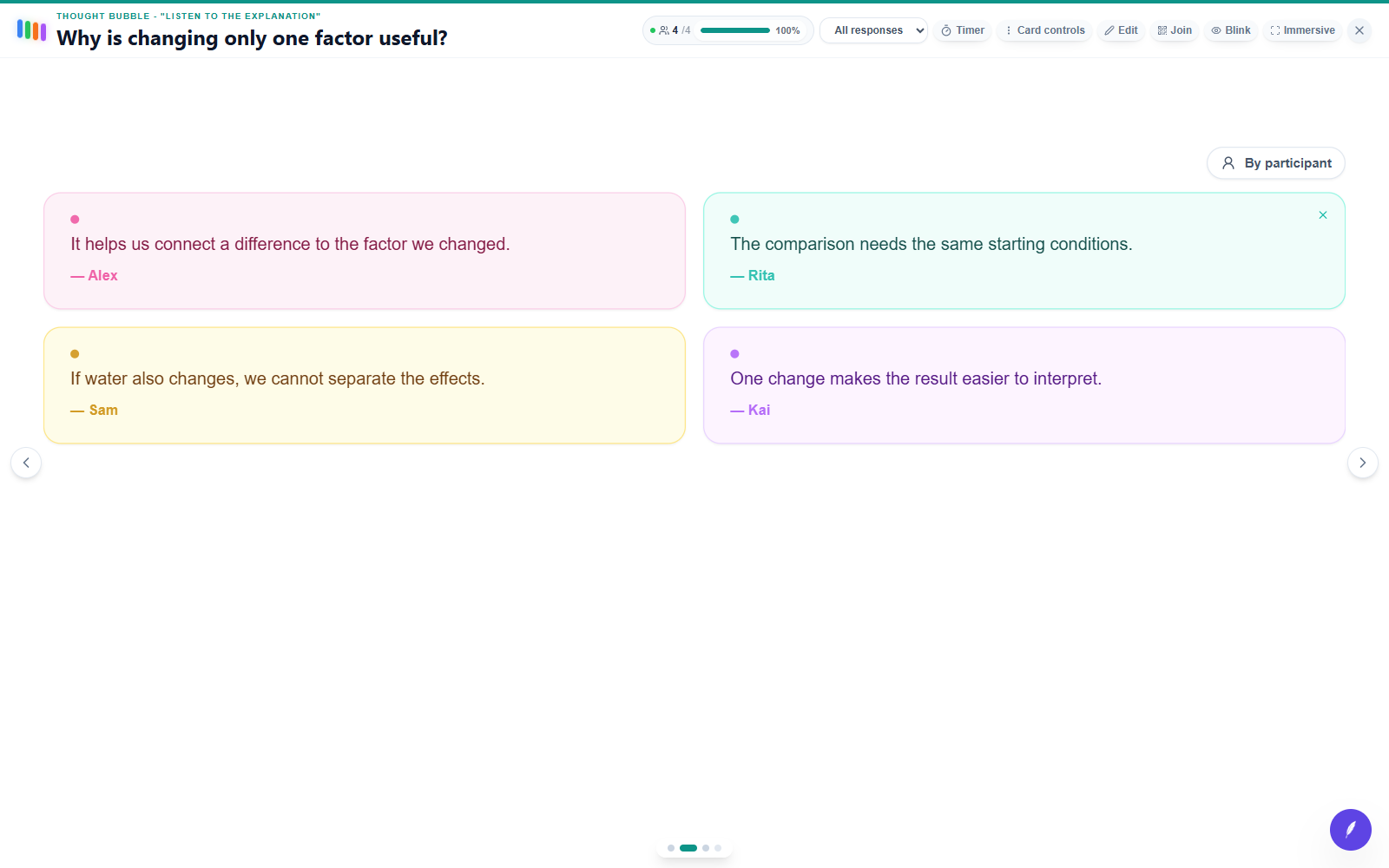
The responses begin to connect a fair comparison with being able to explain a difference.
Use a parallel question rather than repeating the first one. Check whether learners can transfer the reasoning.
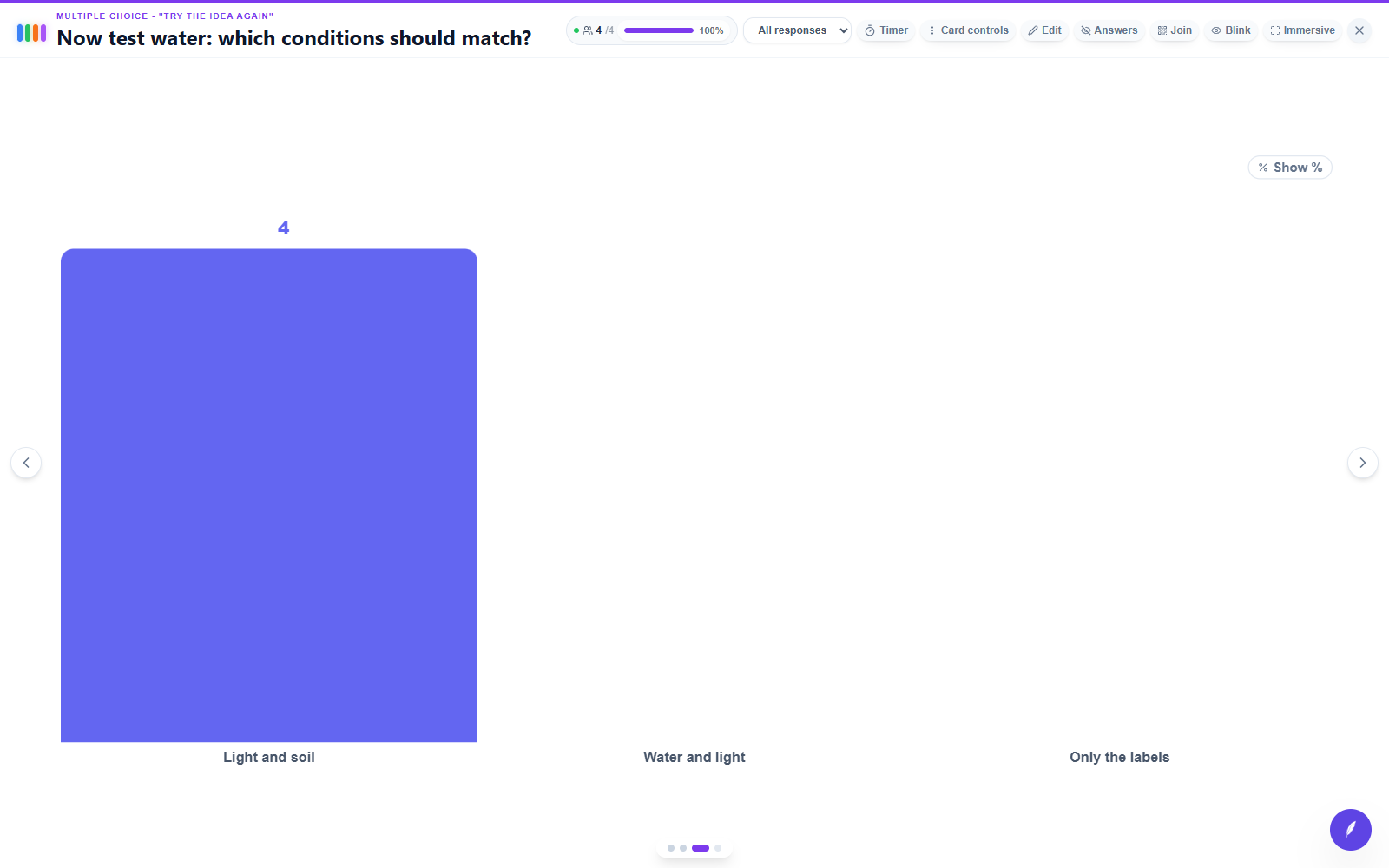
All four demonstration participants now choose matching light and soil. In your own session, use the actual pattern to decide what comes next.
Actual edauthor screens with demonstration responses. Scene artwork is illustrative.
Identify misconceptions while there is still time to respond within the session.
Set up the activity around one clear purpose and decide how the responses will shape what happens next.
Guide participants through a visible sequence with enough time to think, contribute and learn from the emerging results.
It is formative when the evidence is used to adapt teaching or learning rather than only to record a final result.
Usually it works best as a low-stakes activity where learners can expose uncertainty without a penalty.