Do participants need an account to answer an EdAuthor poll?
No. They can join the host's session by code, QR link or direct link without creating an account.
EdAuthor activity template
A live knowledge check gives the host an immediate view of the room while keeping every participant involved. The most valuable moment comes after the vote, when the group examines why each option might seem plausible.
A presenter uses an example survey where people who walk more also report better sleep. The audience explores what the pattern can—and cannot—tell them.
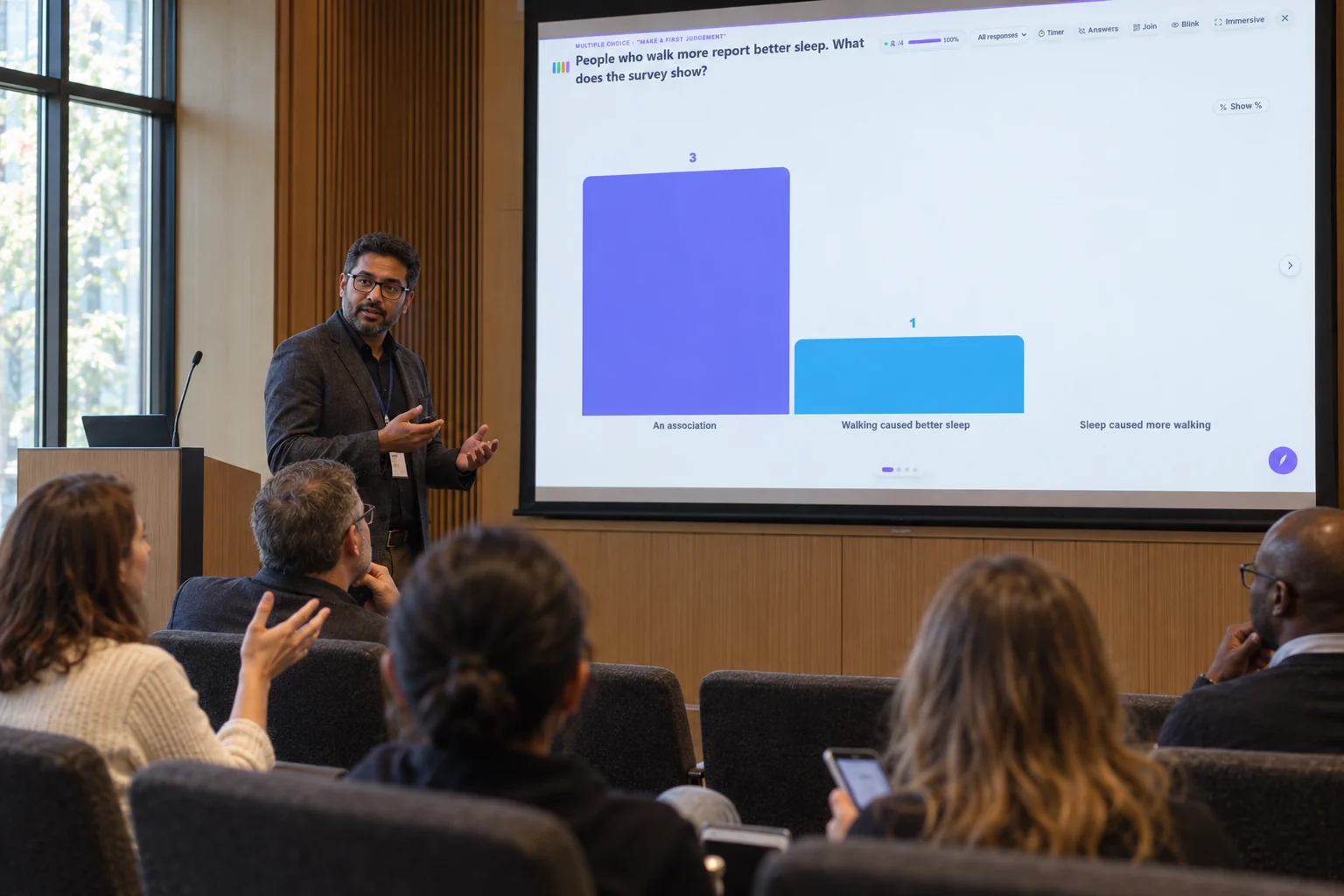
Keep the results hidden while people make a choice. Give them time to read the claim rather than reward speed.
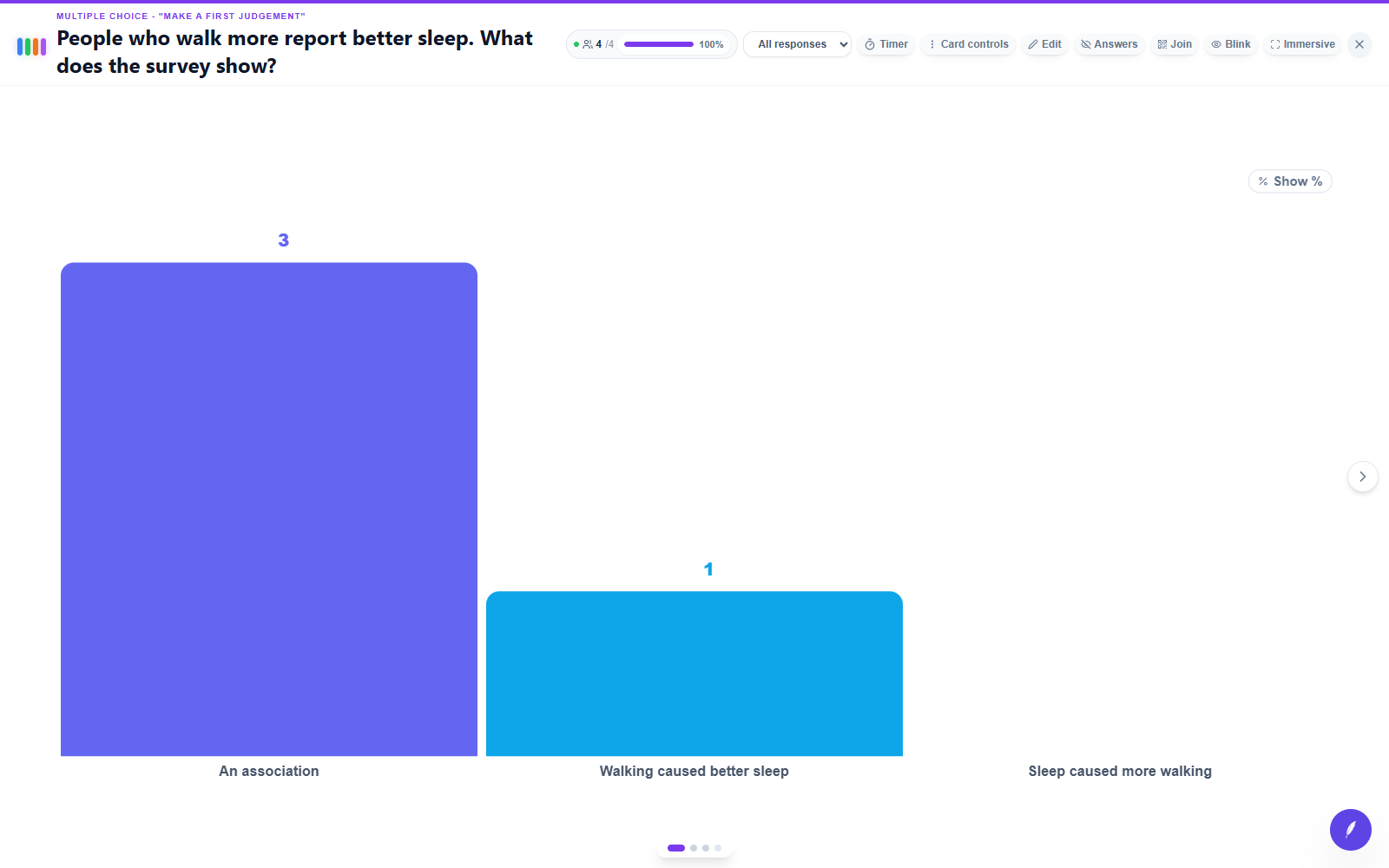
The votes distinguish an observed relationship from a claim about cause. The split gives the presenter a discussion to lead.
Ask why another option might look reasonable. Invite alternative explanations before giving the conclusion.
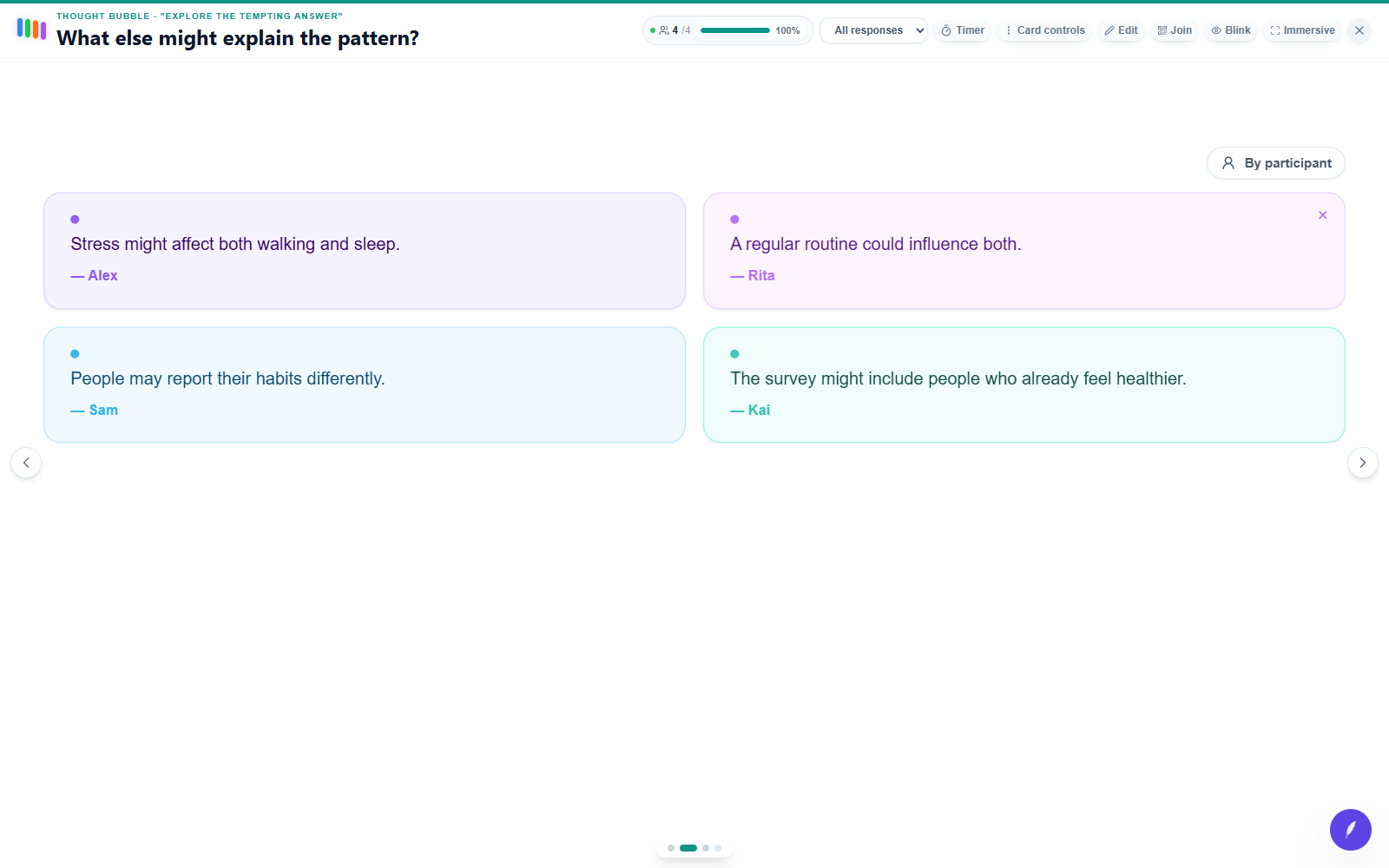
Participants raise stress, routines and other differences. The discussion now has something specific to examine.
Finish by considering what information would strengthen the reasoning. Use the ranking as a starting point for explanation.
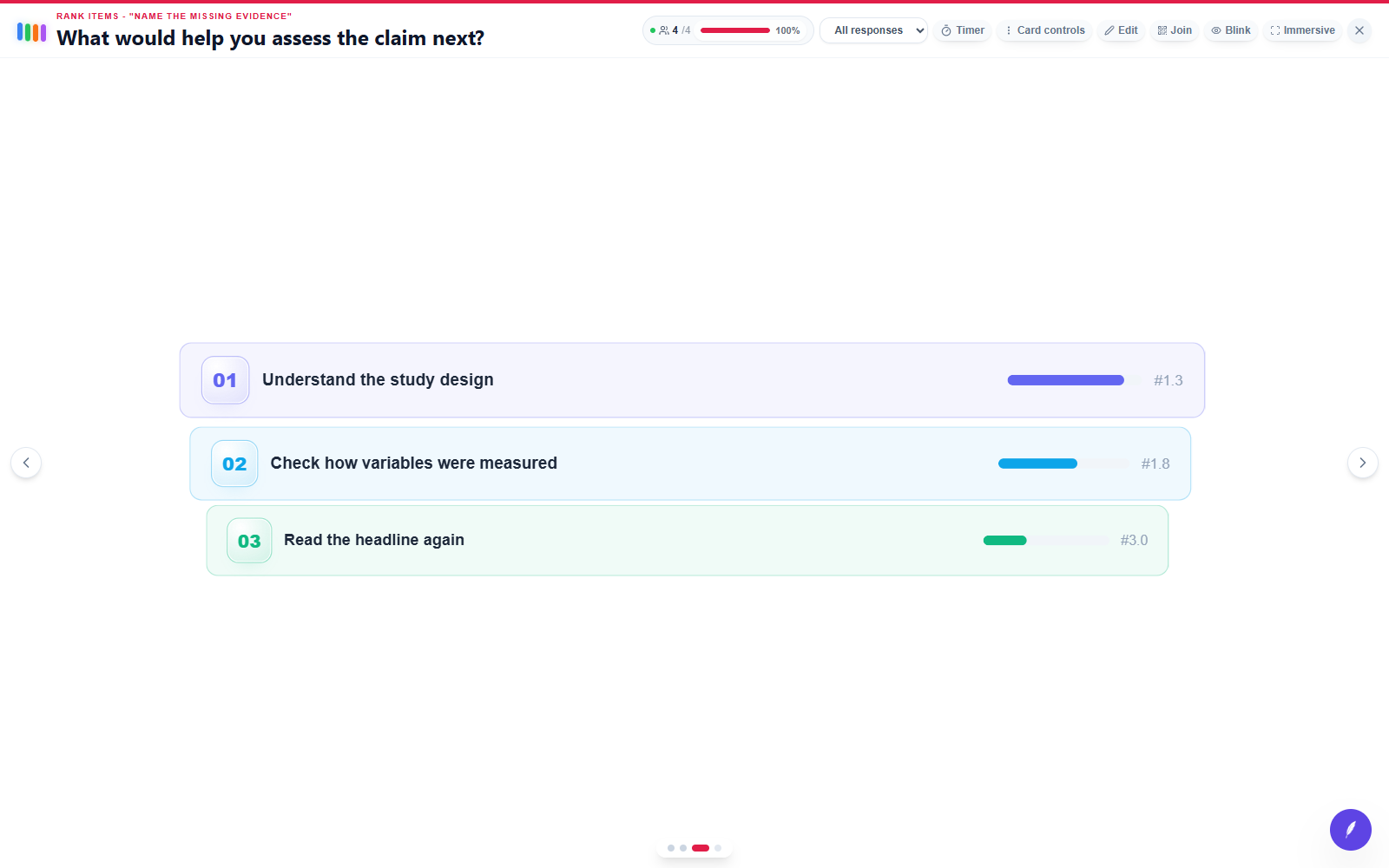
Study design rises to the top, followed by how walking and sleep were measured.
Actual edauthor screens with demonstration responses. Scene artwork is illustrative.
Check the room quickly without treating speed as the same thing as understanding.
Set up the activity around one clear purpose and decide how the responses will shape what happens next.
Guide participants through a visible sequence with enough time to think, contribute and learn from the emerging results.
No. They can join the host's session by code, QR link or direct link without creating an account.
Often it is useful to hide results until most people have responded, then reveal the distribution for discussion.