Why use a scenario for a knowledge check?
A scenario shows whether participants can recognise and apply the relevant principle when it appears in a realistic context.
EdAuthor activity template
A scenario-based knowledge check tests judgement in a context that resembles real work. Participants choose an action, compare reasoning and receive feedback linked to the policy, process or principle being taught.
A handover reaches a new team with a deadline but no clear owner. The trainer asks what should happen first, then explores the consequences of different choices.

Present the decision without burying it in detail. Ask everyone to choose before hearing the discussion.
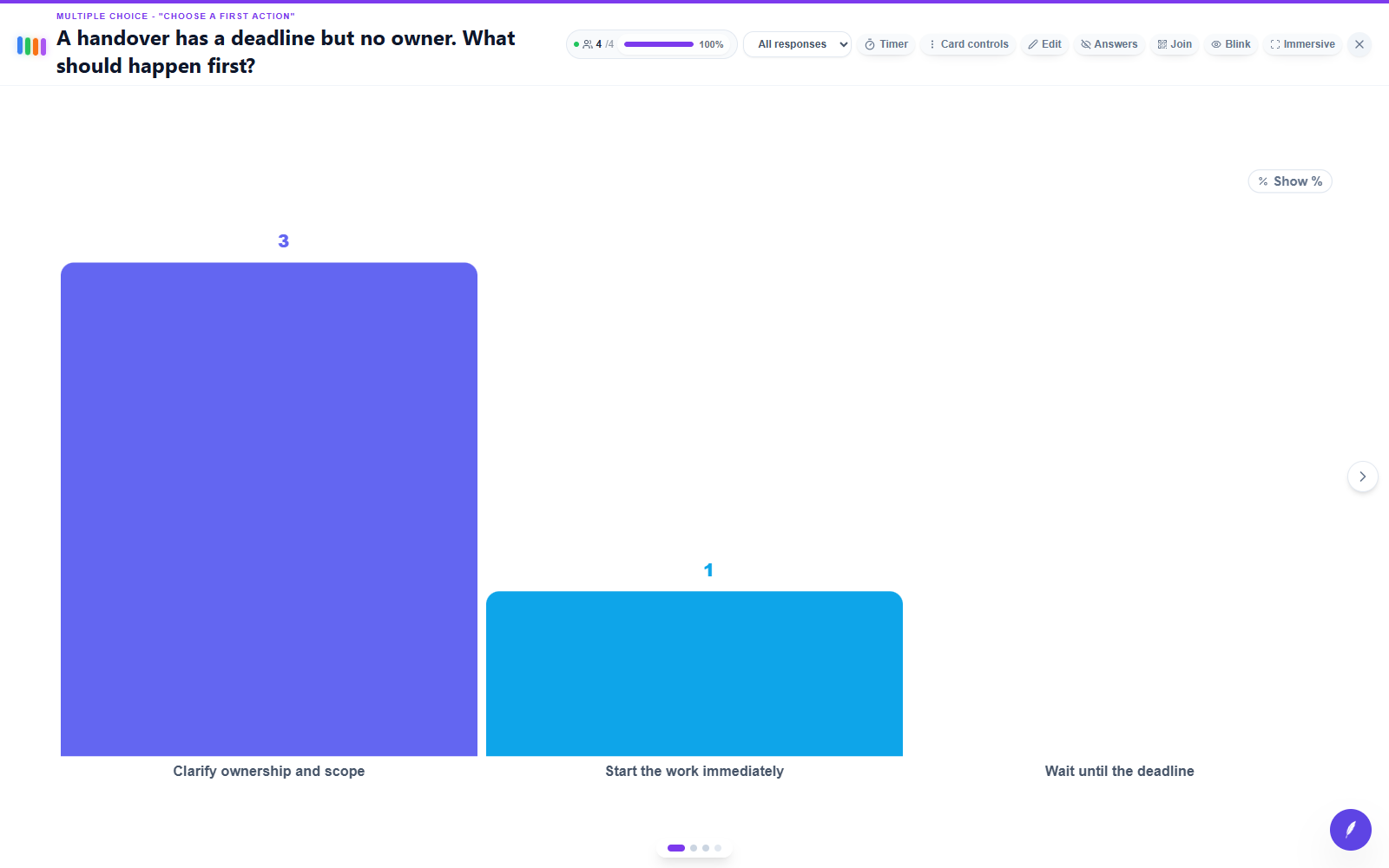
Most participants clarify ownership; one would start the work immediately. Both choices create a useful conversation.
Ask the room to weigh what matters. Connect each priority to a likely consequence for the receiving team.
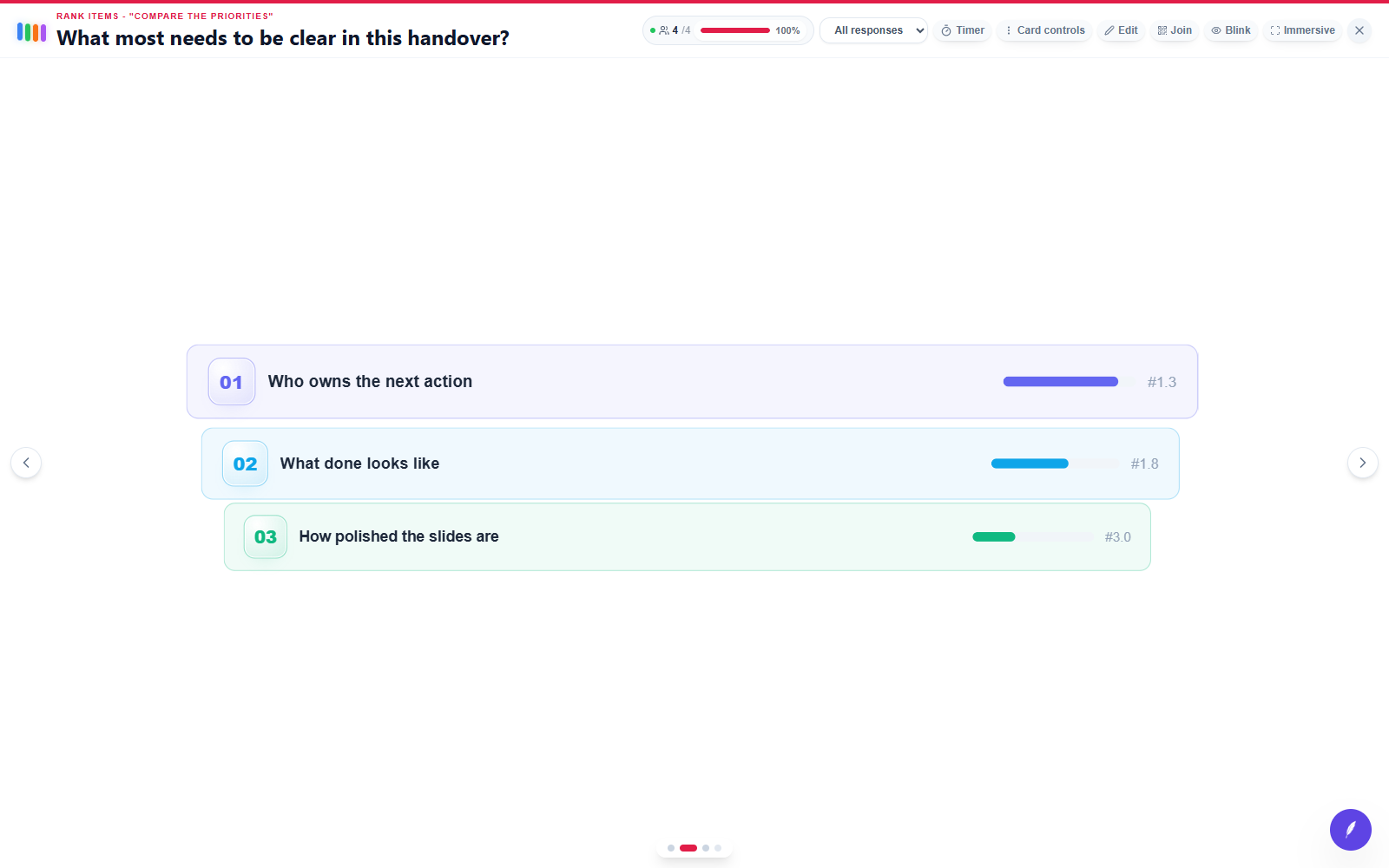
Ownership comes first, with a clear definition of done close behind.
Invite a real situation and one change. Turn the discussion into a practice people can use after the workshop.
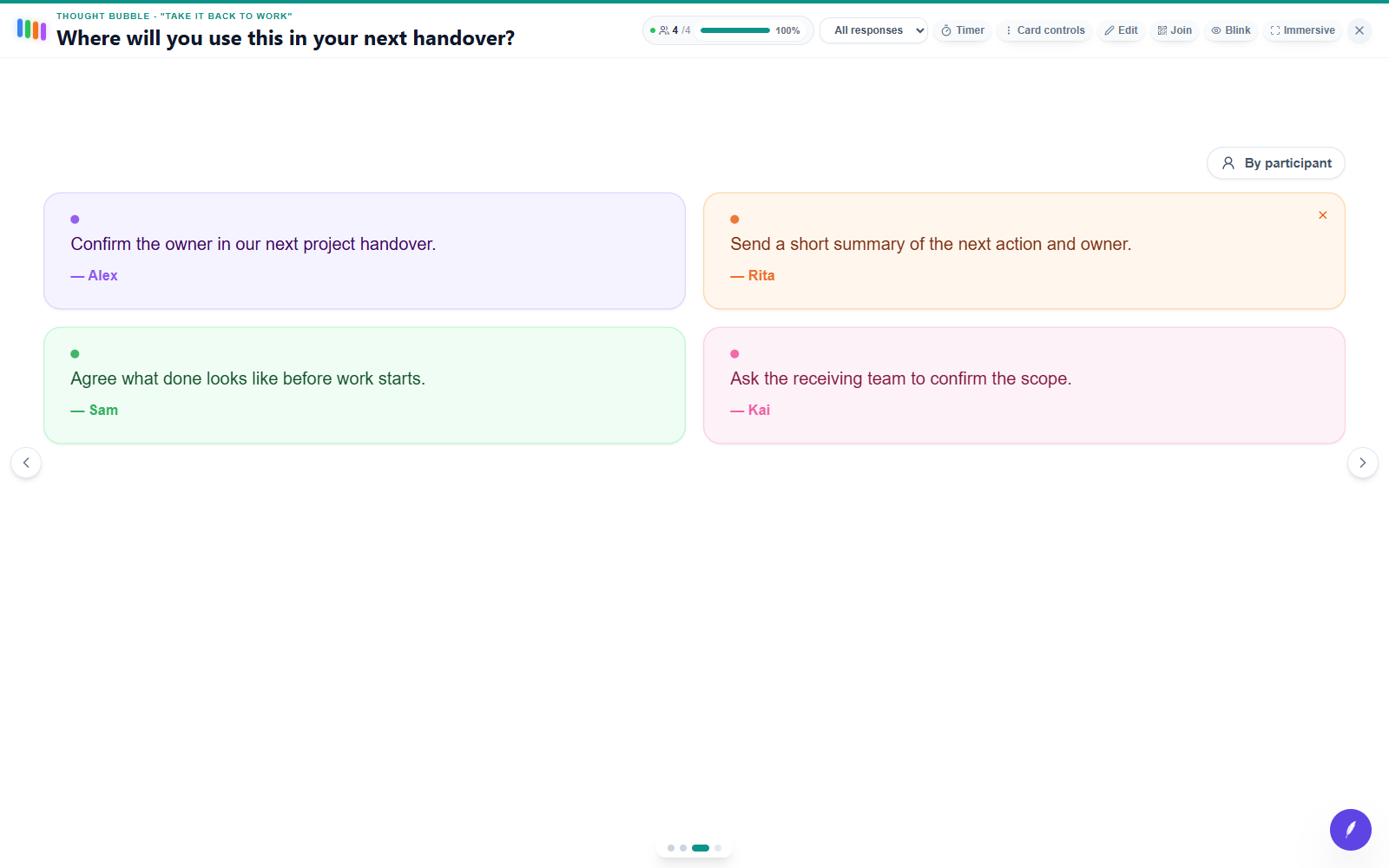
People name owner checks, acceptance criteria and short confirmation messages they can use straight away.
Actual edauthor screens with demonstration responses. Scene artwork is illustrative.
See whether participants can use the training content in context rather than only recall it.
Set up the activity around one clear purpose and decide how the responses will shape what happens next.
Guide participants through a visible sequence with enough time to think, contribute and learn from the emerging results.
A scenario shows whether participants can recognise and apply the relevant principle when it appears in a realistic context.
Yes, provided the scenario and feedback accurately reflect the organization's current policy and required procedures.