What is reflective learning?
Reflective learning is the deliberate process of examining experience and evidence to develop understanding and guide future action.
EdAuthor activity template
Reflection becomes more useful when it moves beyond describing what happened. This sequence asks learners to identify evidence, examine why it matters and turn the insight into a specific action or question.
A group has practised listening conversations. The coach asks them to move from a specific moment, through what they noticed, to one action they can try.
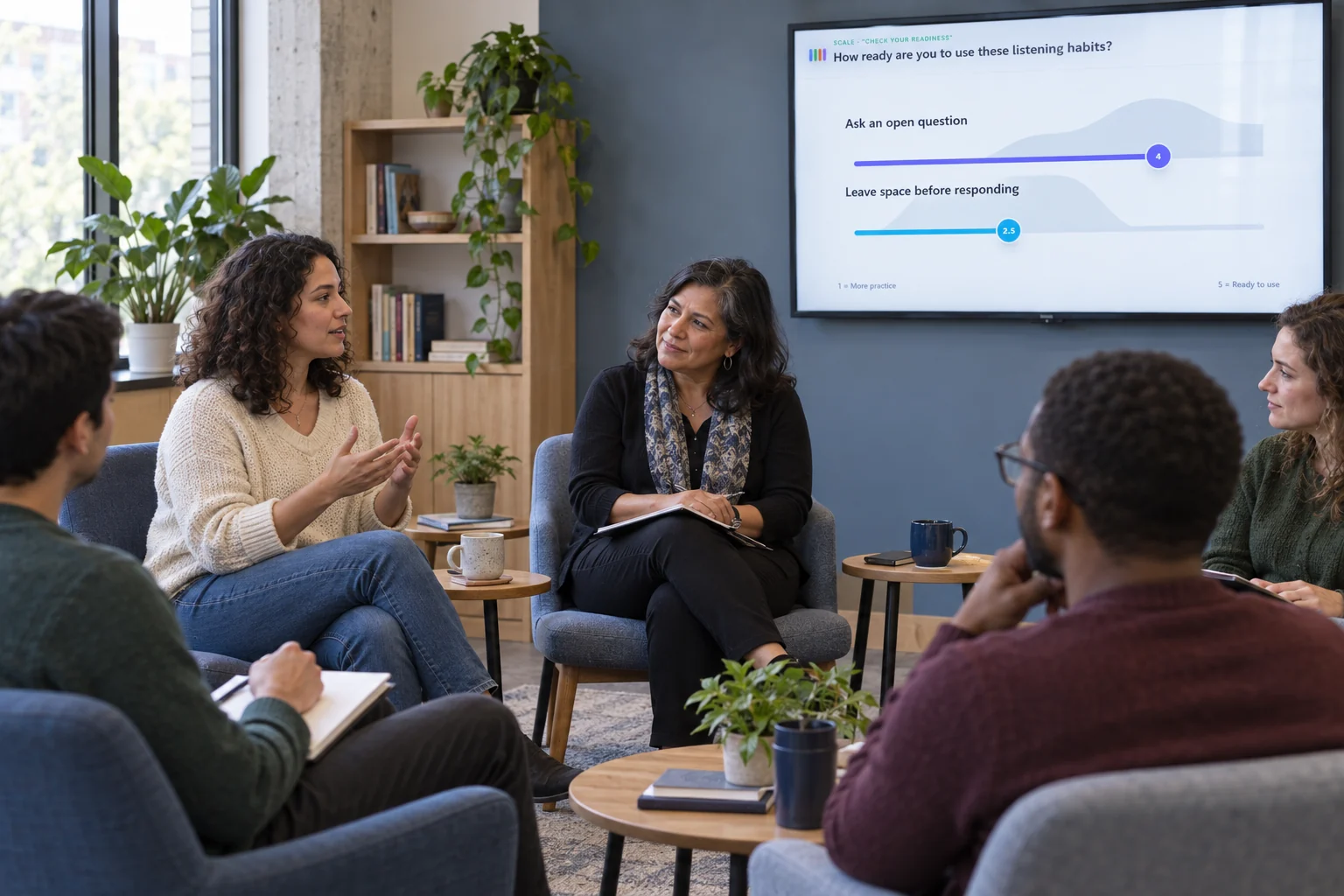
Ask for a moment rather than a general judgement. Let people notice what happened before deciding whether it was good or bad.
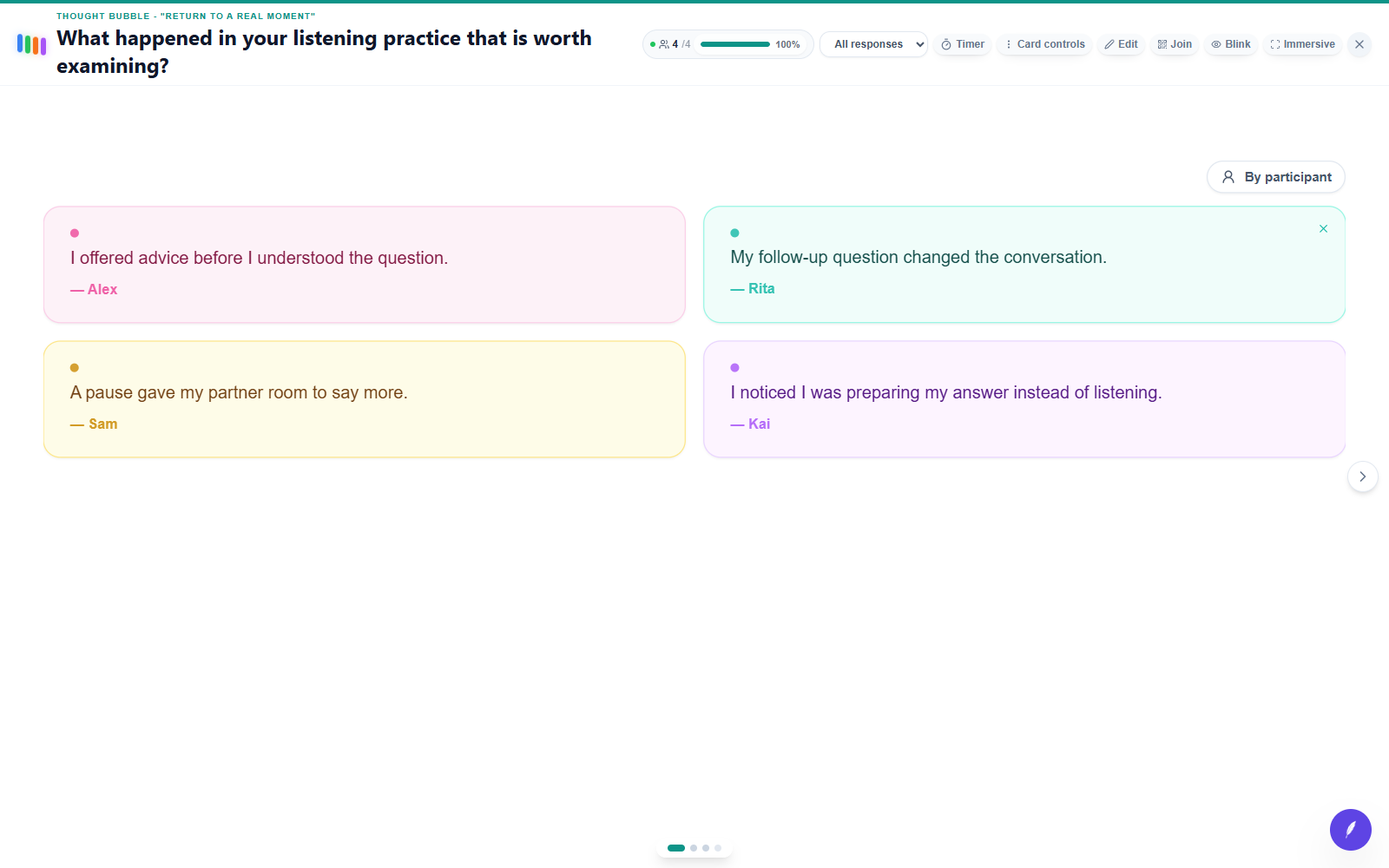
The responses name interruptions, pauses and questions. These are behaviours the group can explore.
Invite an honest check on applying the practice. Discuss where another example or rehearsal would help.
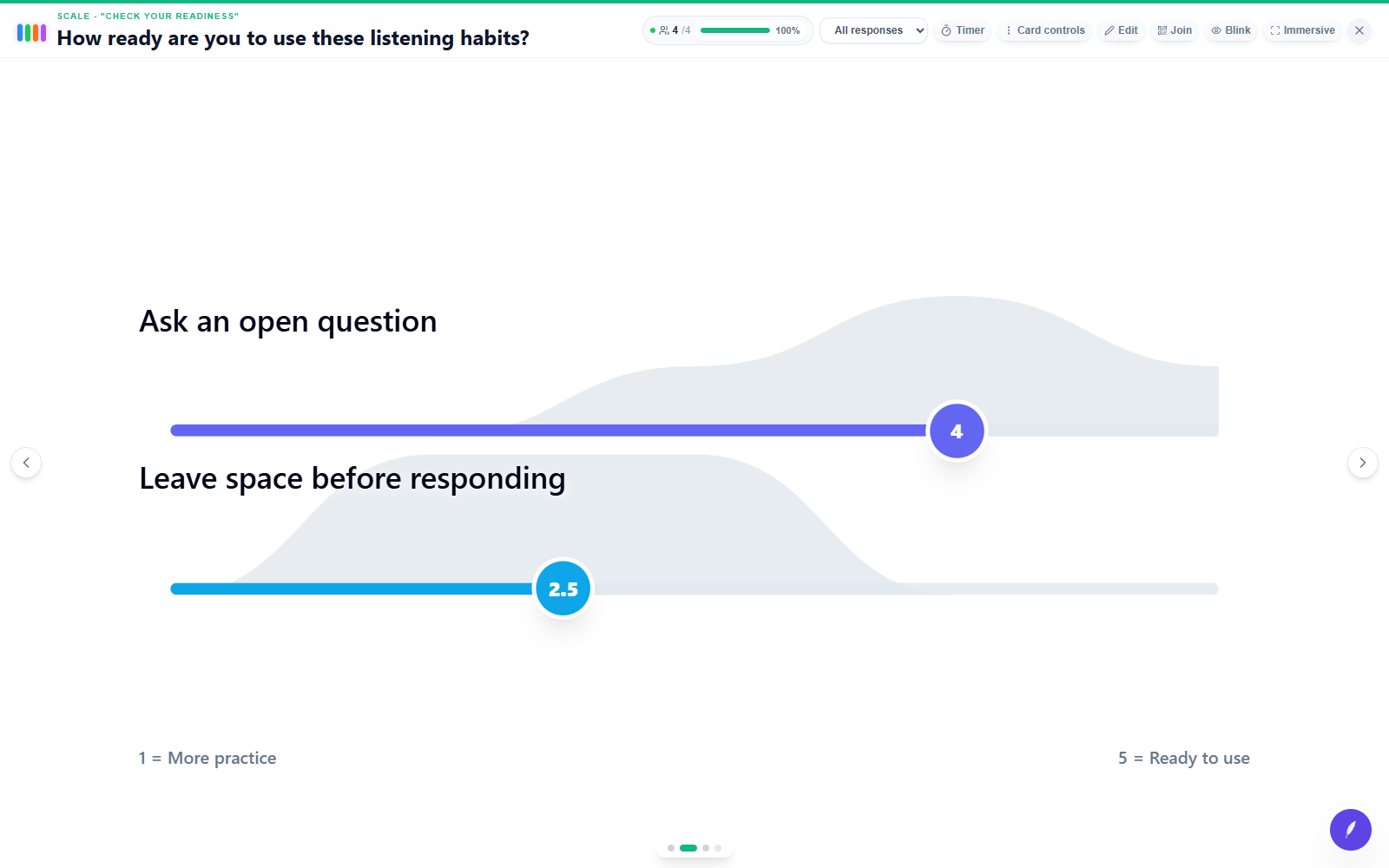
Waiting before responding feels less familiar than asking an open question. That suggests a useful next practice.
End with a specific behaviour people can recognise in their next conversation. Small experiments make reflection usable.
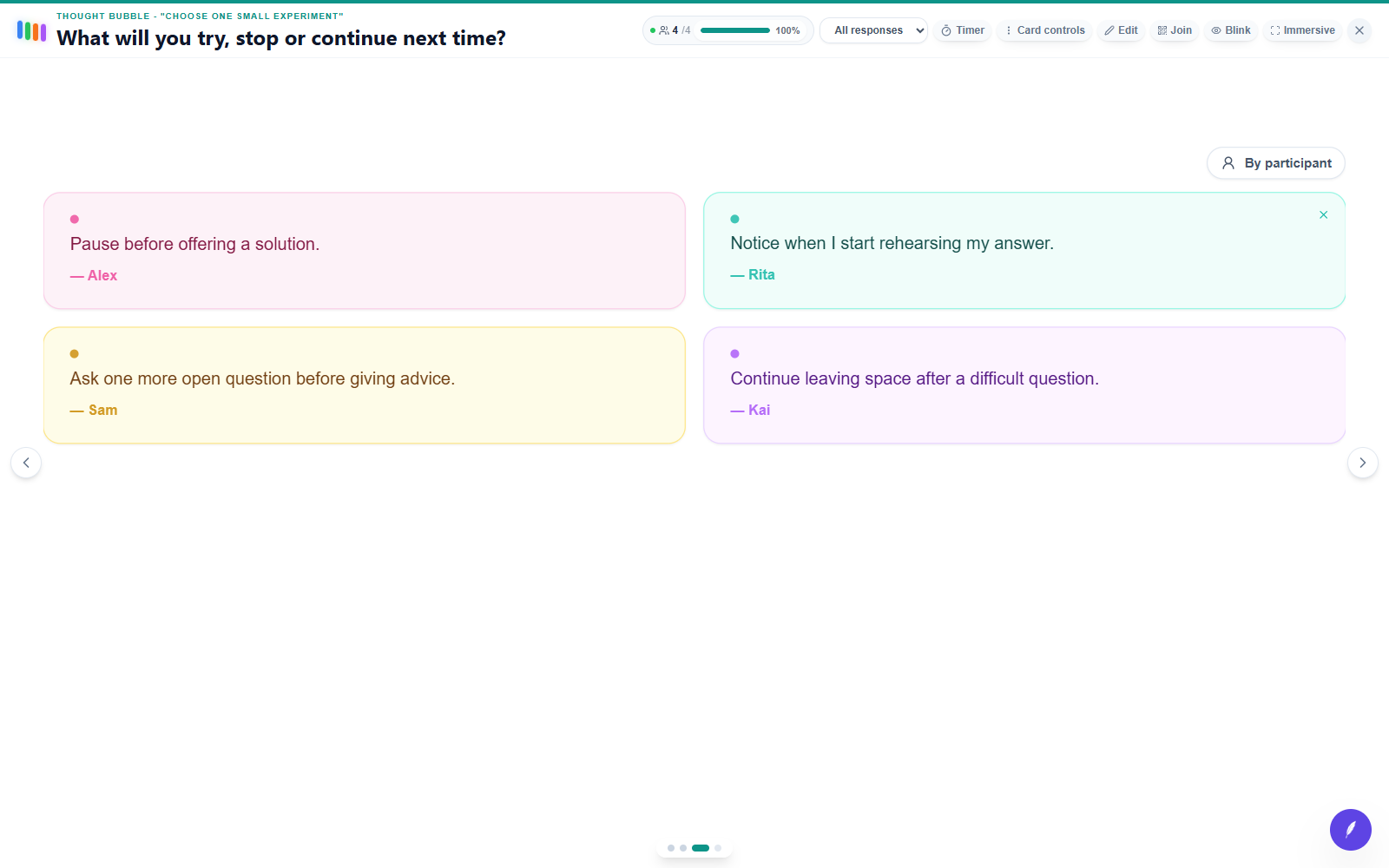
Participants choose pauses, follow-up questions and less advice-giving as concrete next steps.
Actual edauthor screens with demonstration responses. Scene artwork is illustrative.
Help learners connect experience to meaning and identify a realistic next step.
Set up the activity around one clear purpose and decide how the responses will shape what happens next.
Guide participants through a visible sequence with enough time to think, contribute and learn from the emerging results.
Reflective learning is the deliberate process of examining experience and evidence to develop understanding and guide future action.
No. Some reflection is best kept private, while selected themes or voluntary contributions can support shared learning.