How can a tutor encourage quieter students to participate?
Private preparation and small-group contributions give students more than one way to participate before the whole-class discussion.
EdAuthor activity template
A structured seminar makes space for preparation, evidence and multiple interpretations. Students first commit to an idea, then test it with peers before the tutor brings patterns and tensions into the wider discussion.
A seminar is discussing a proposal to reduce car traffic around a university. Students compare claims, identify assumptions and ask what evidence could change their position.

Ask students to support an initial position. Give quieter contributors a way to put their reasoning into the room.
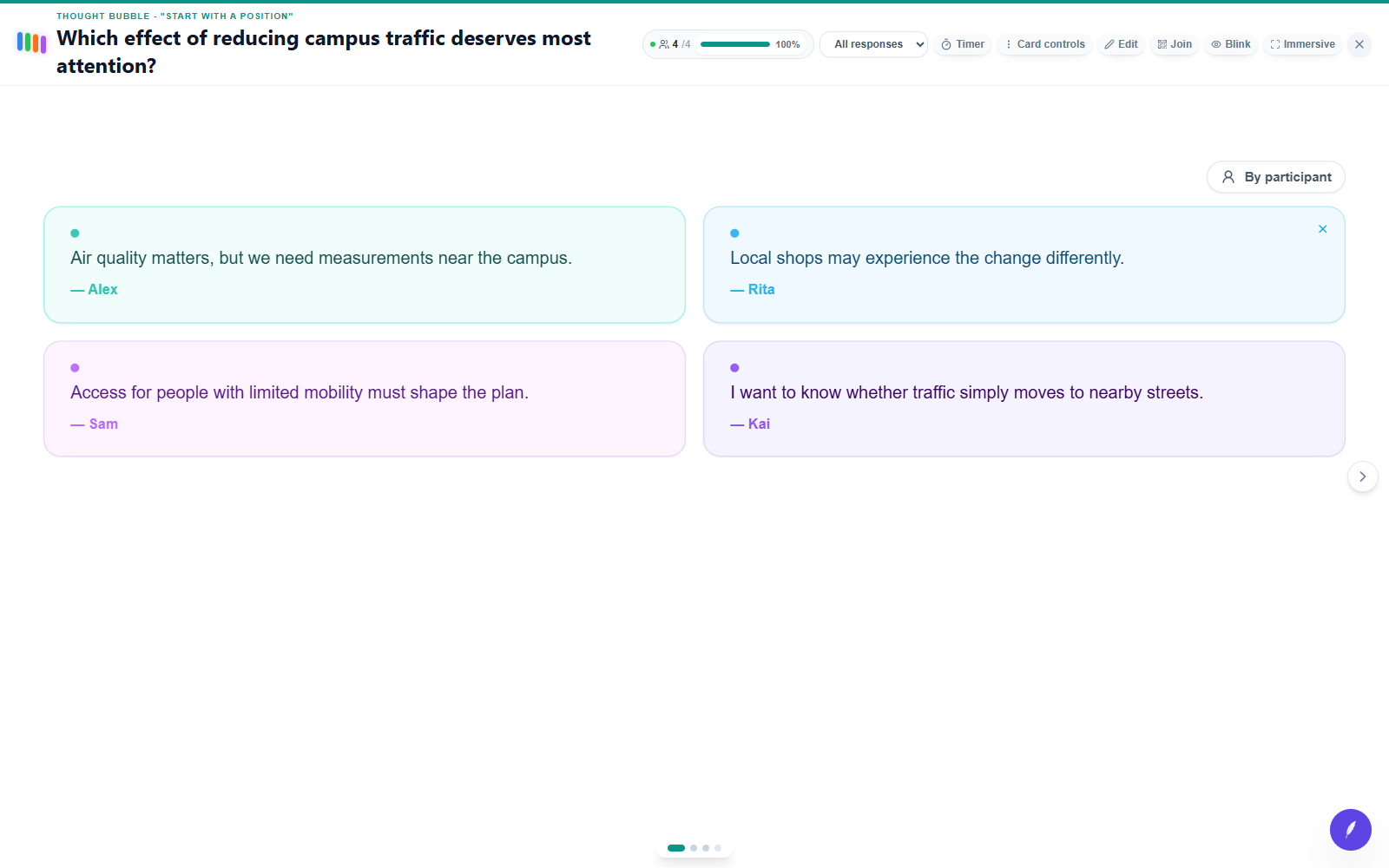
Air quality, access and the local economy create different starting points for the same discussion.
Invite students to rank the assumptions behind the proposal. Discuss why a different order might also be defensible.
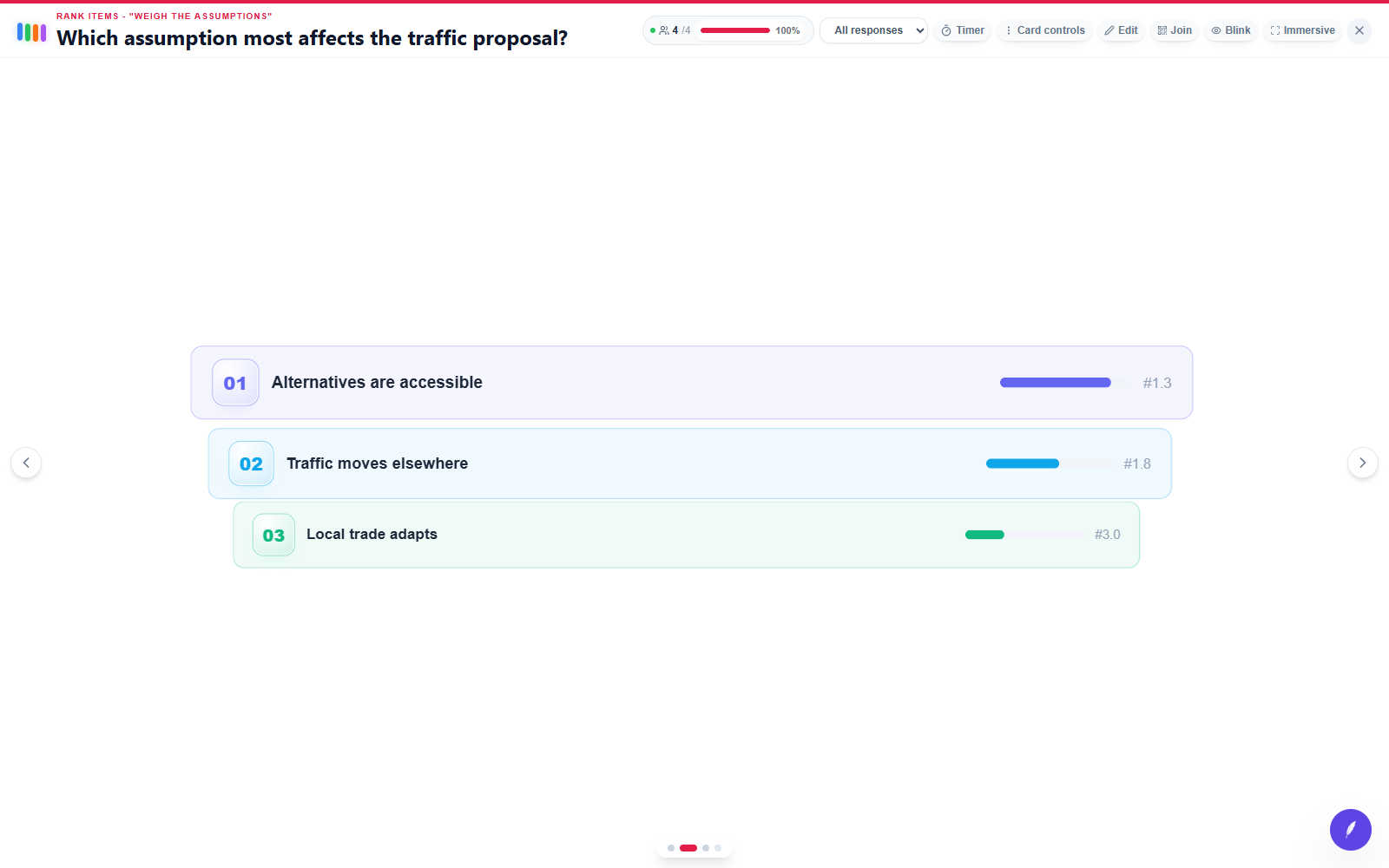
The ranking puts alternative transport first. The tutor can now ask which evidence would test that assumption.
Close with an answerable question. A stronger seminar ends with clearer inquiry, even when people still disagree.
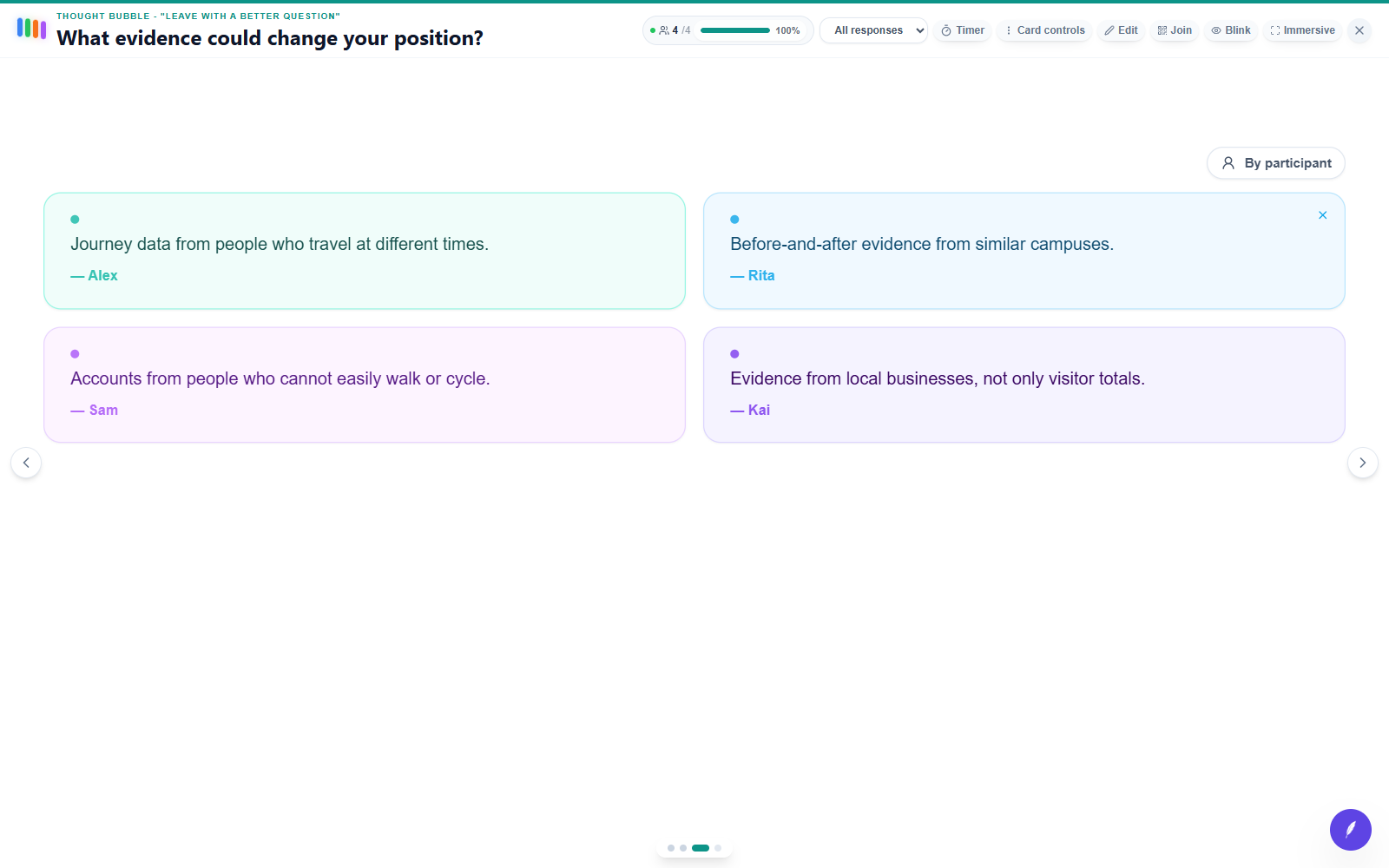
Students ask for journey data, accessibility accounts and local business evidence rather than a simple show of hands.
Actual edauthor screens with demonstration responses. Scene artwork is illustrative.
Move beyond a conversation dominated by a few confident speakers.
Set up the activity around one clear purpose and decide how the responses will shape what happens next.
Guide participants through a visible sequence with enough time to think, contribute and learn from the emerging results.
Private preparation and small-group contributions give students more than one way to participate before the whole-class discussion.
Yes. Students can contribute through EdAuthor in a browser while the tutor uses the results to structure video or audio discussion.