What is the purpose of a retrospective?
A retrospective helps a group learn from how it worked and agree improvements for the next period or project.
EdAuthor activity template
A retrospective creates a structured pause to examine how work happened, not only what was delivered. Individual input broadens the evidence, thematic discussion builds shared understanding and prioritisation keeps the close focused.
A small team is reviewing its last project cycle. They collect observations, look for shared themes and choose one improvement to test next.

Give everyone a way to contribute before the discussion starts. Keep observations about the work specific and useful.
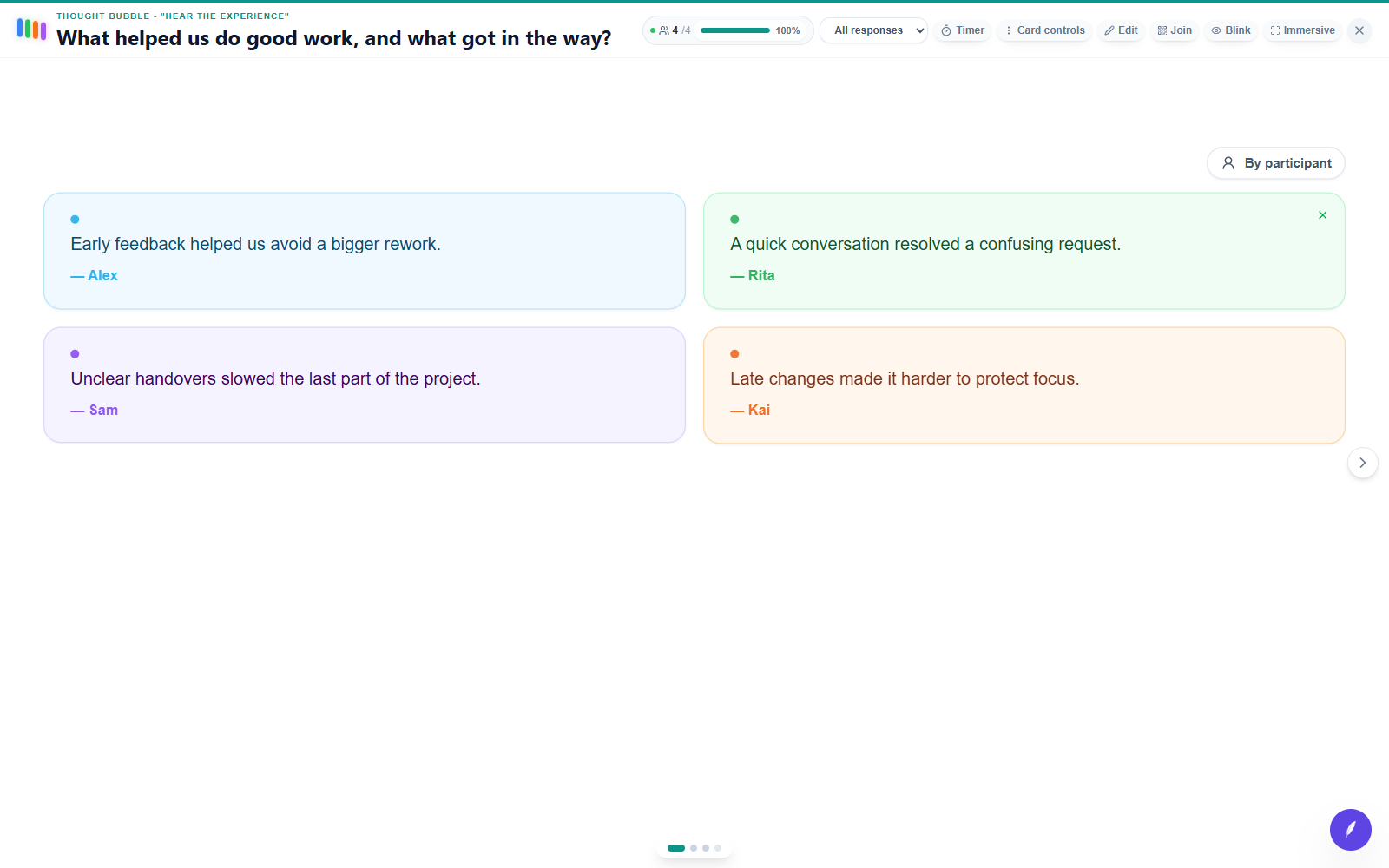
Early feedback helped; unclear handovers and late changes made the work harder.
Ask the team to name the themes they hear. Read the shared picture as a prompt for conversation, not a verdict.
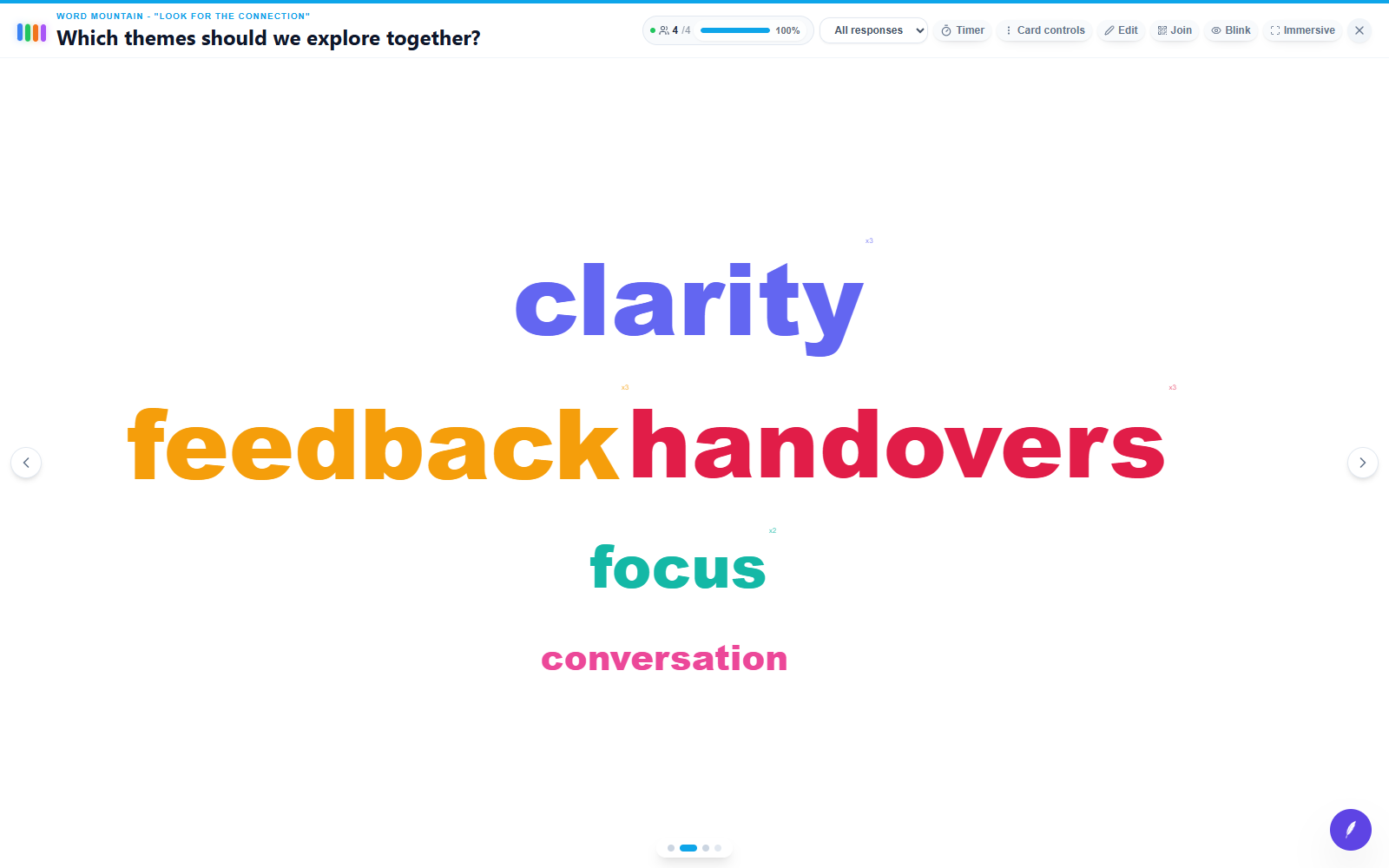
Clarity, feedback and handovers connect several different observations.
Choose a small improvement, agree an owner and decide when to review it. The ranking helps focus the conversation.
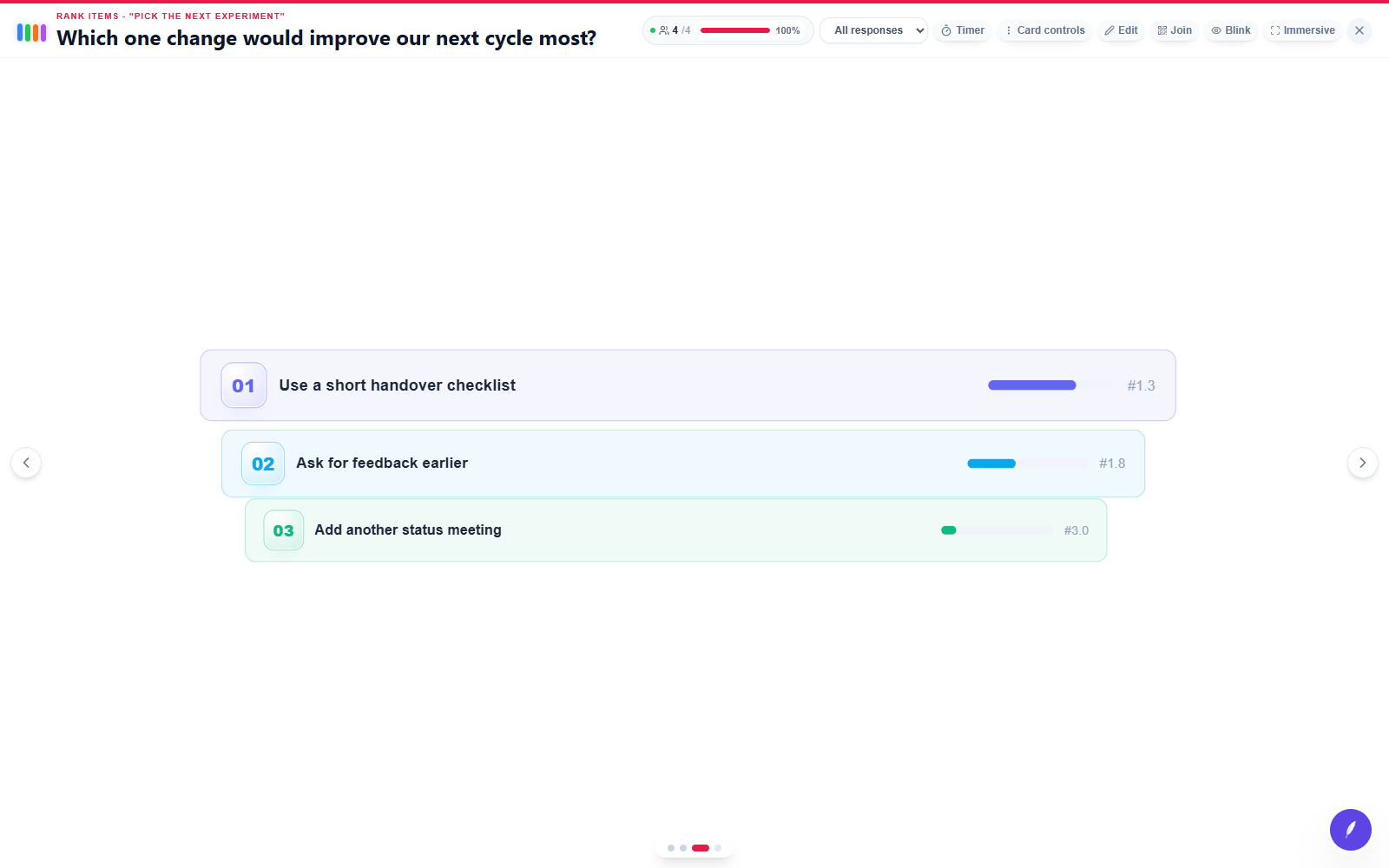
A clearer handover checklist leads this example. The team can now agree who will try it and when to revisit it.
Actual edauthor screens with demonstration responses. Scene artwork is illustrative.
Gather more than the loudest views and agree a small number of useful improvements.
Set up the activity around one clear purpose and decide how the responses will shape what happens next.
Guide participants through a visible sequence with enough time to think, contribute and learn from the emerging results.
A retrospective helps a group learn from how it worked and agree improvements for the next period or project.
One or two well-owned actions are often more useful than a long list that the team cannot realistically complete.