Do students have to buy anything or interview business staff?
No. Every checkpoint can be completed through respectful observation from a public place or through clearly labelled public online evidence.
EdAuthor activity template
The Reading Food-System Quest turns the city into a collaborative learning environment. Teams travel from the University of Reading through eight local agri-food checkpoints, solve scored challenges, collect respectful evidence and return to propose one practical improvement.
This example follows the return-and-reflect part of the food-system quest. Teams place observations on an uploaded Space Card board, compare possible improvements and check their confidence. The full guide below covers route preparation and fieldwork.
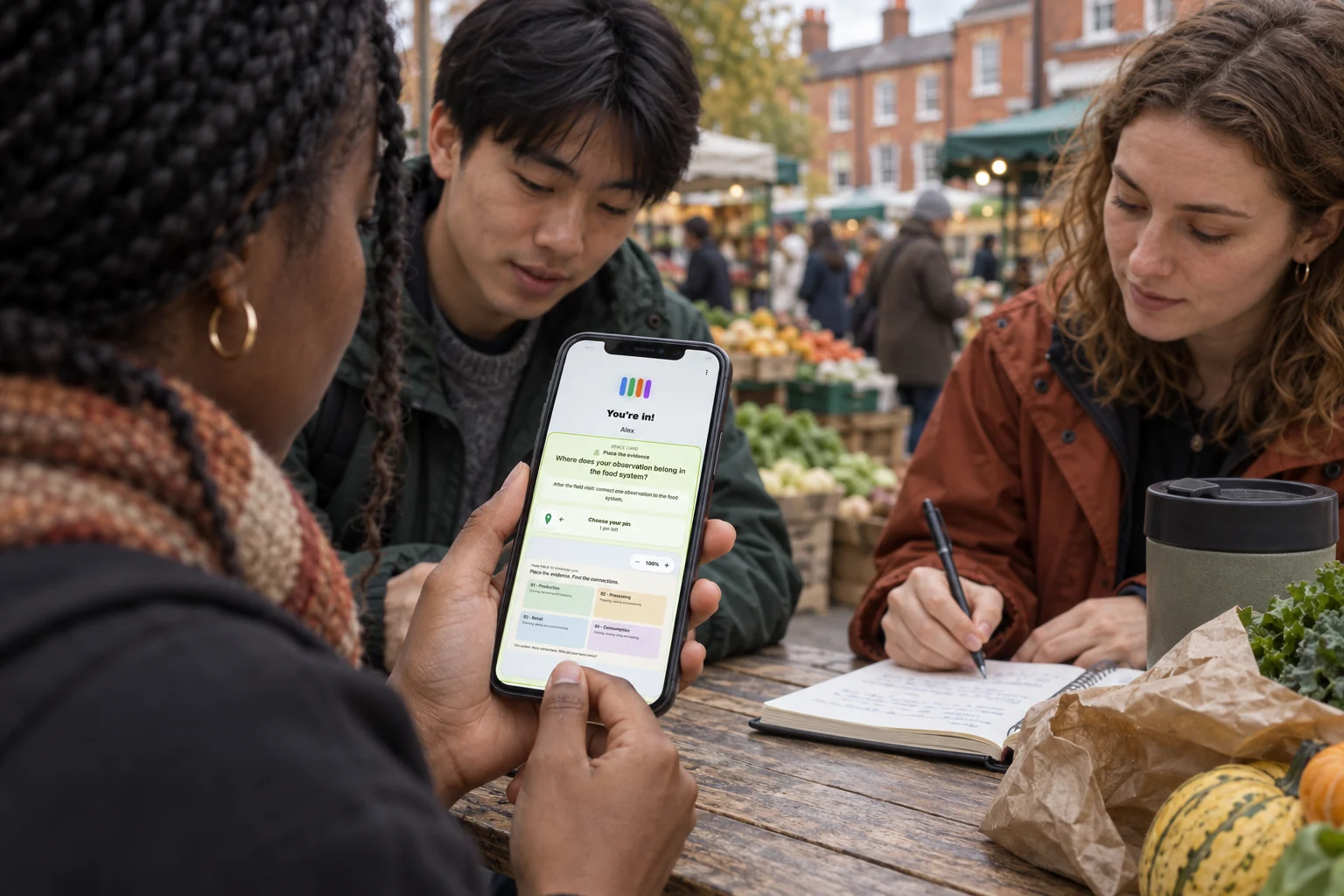
After the visit, place an evidence pin on a shared food-system board. Give the observation a location in the system and explain why it belongs there.
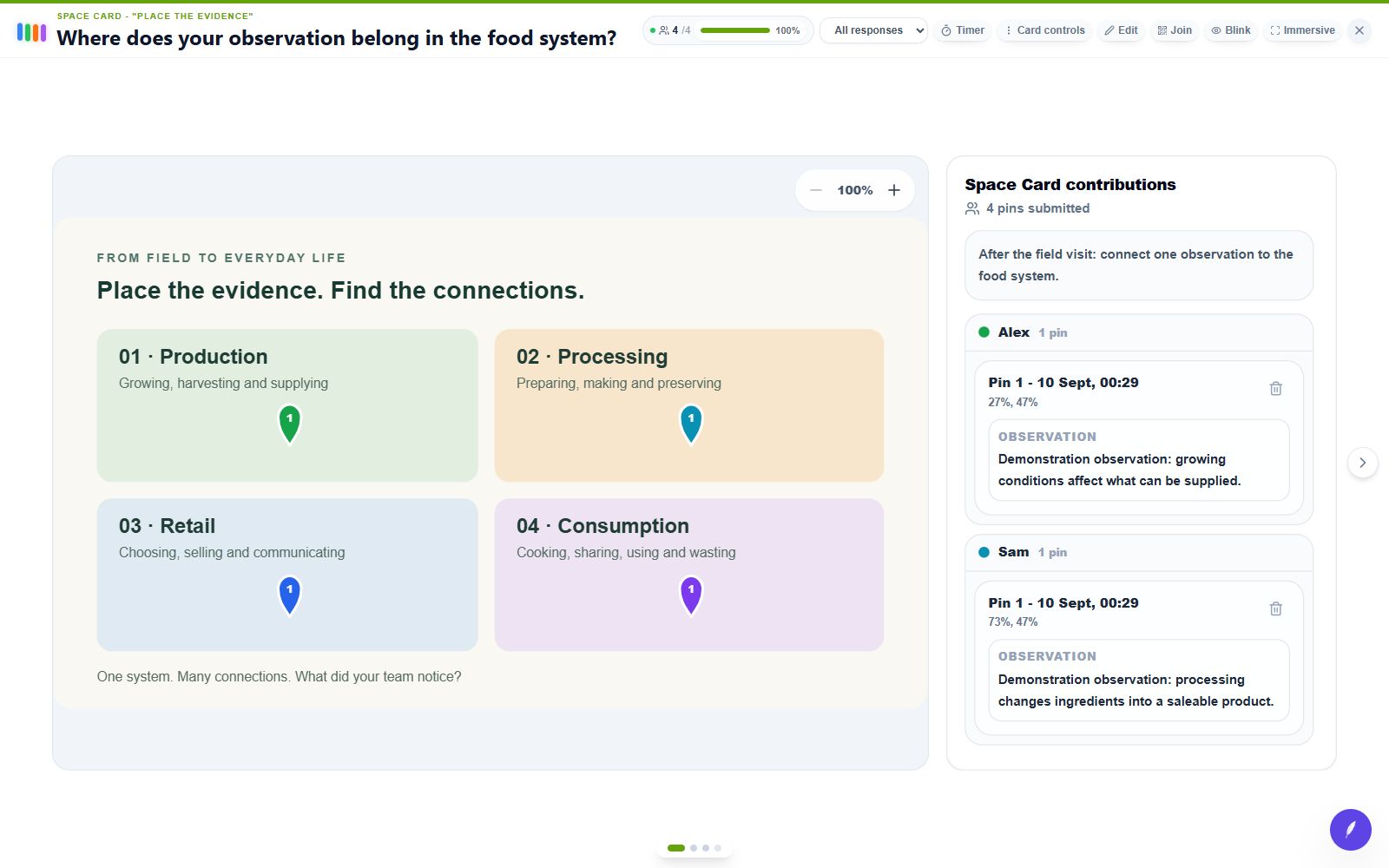
The example uses edauthor’s uploaded-image Space Card. Four demonstration observations connect production, processing, retail and consumption.
Ask teams to weigh practical improvements against what they observed. The ranking opens a discussion about trade-offs.
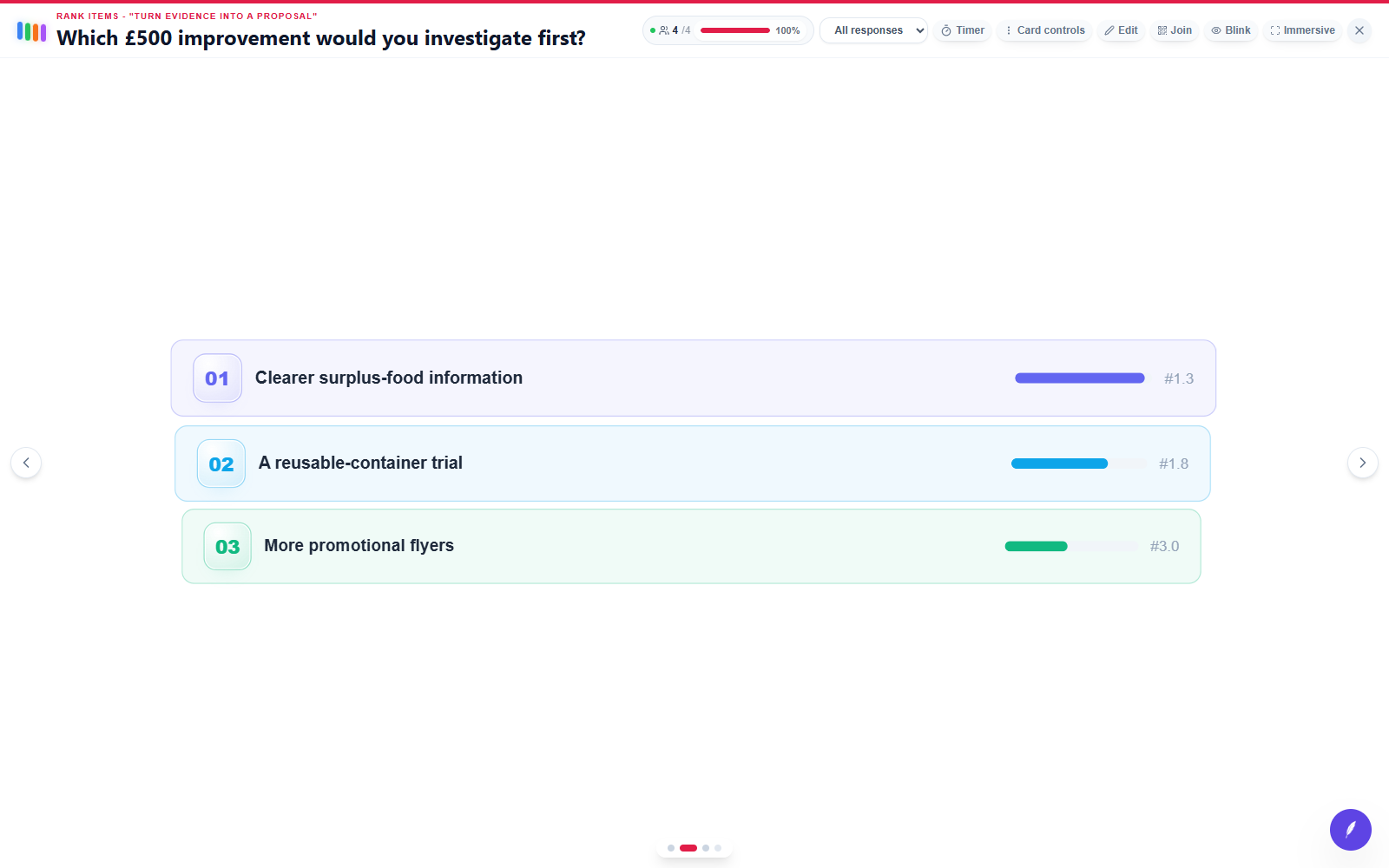
Clearer surplus-food information comes first here. Teams still need to test feasibility against their own evidence.
Close by checking whether the field evidence helped people see the wider system. Use the spread to guide the final discussion.
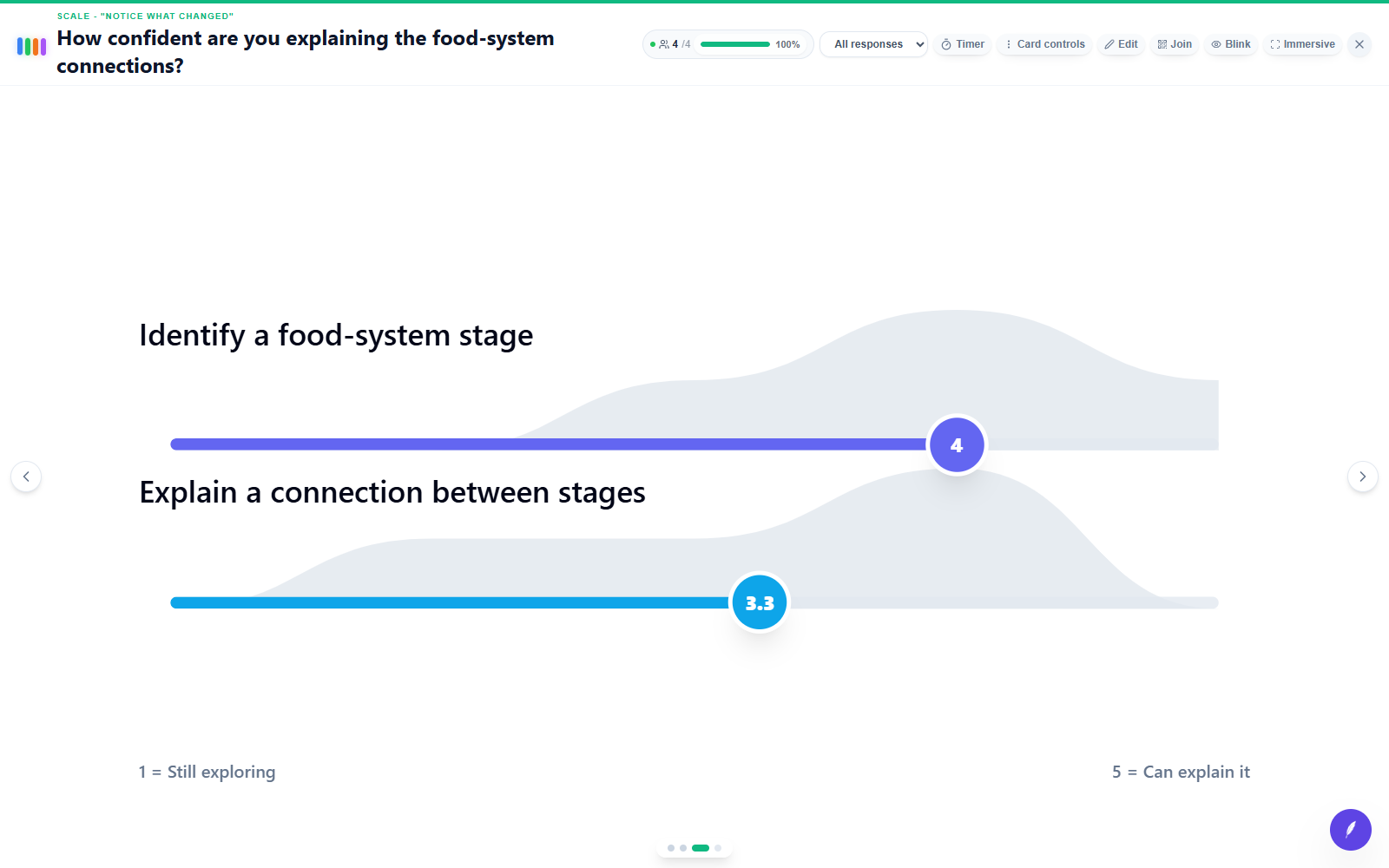
The confidence check distinguishes identifying a stage from explaining a connection between stages.
Actual edauthor screens with demonstration responses. Scene artwork is illustrative.
Help students recognise food-system stages, local enterprise, sustainability and community value through structured field evidence.
Set up the activity around one clear purpose and decide how the responses will shape what happens next.
Guide participants through a visible sequence with enough time to think, contribute and learn from the emerging results.
No. Every checkpoint can be completed through respectful observation from a public place or through clearly labelled public online evidence.
No. The host must verify locations, opening hours, accessibility, crossings and institutional field-trip requirements for the actual date.
Each team appoints one Evidence Keeper to submit the eight Space Card pins, while the other members support navigation and analysis.