What makes an icebreaker purposeful?
It helps people begin contributing while also connecting directly to the session topic, relationships or intended outcomes.
EdAuthor activity template
A strong icebreaker is not a disconnected game. It lowers the threshold for contributing, helps participants notice who is in the room and creates a bridge into the workshop purpose.
A new group has arrived for a workshop on better meetings. The facilitator uses a low-pressure opening to connect people’s experience with the work ahead.

Use a quick confidence check that everyone can answer. Make room for both experience and uncertainty.
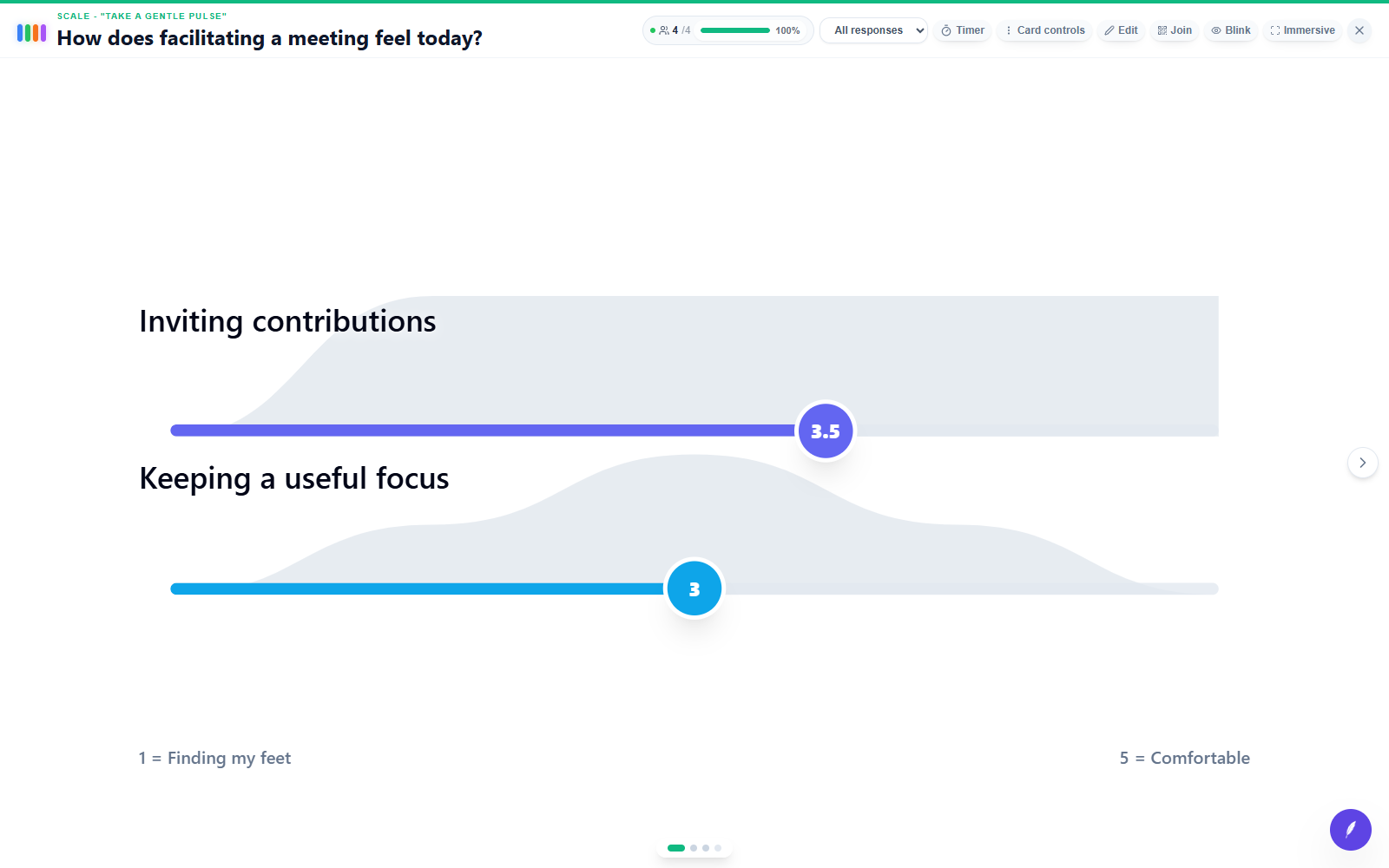
The room brings different levels of confidence. The facilitator can build pairs that learn from one another.
Ask participants to exchange one hope with a neighbour, then contribute a few words to the shared picture.
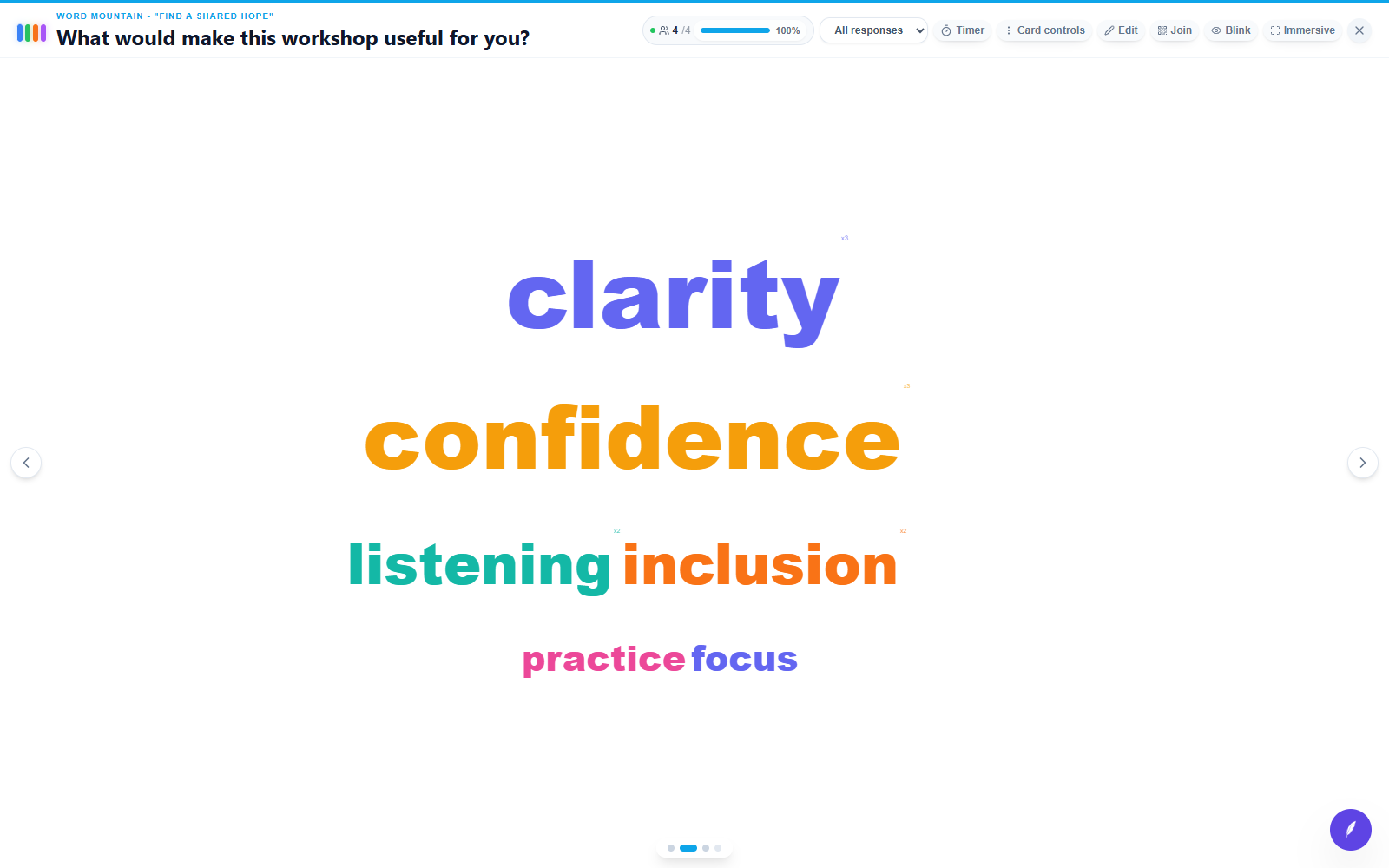
Clarity and confidence stand out, alongside listening and inclusion. The opening is already shaping the agenda.
Invite a concrete context. Link the workshop activities to the real situations people bring with them.
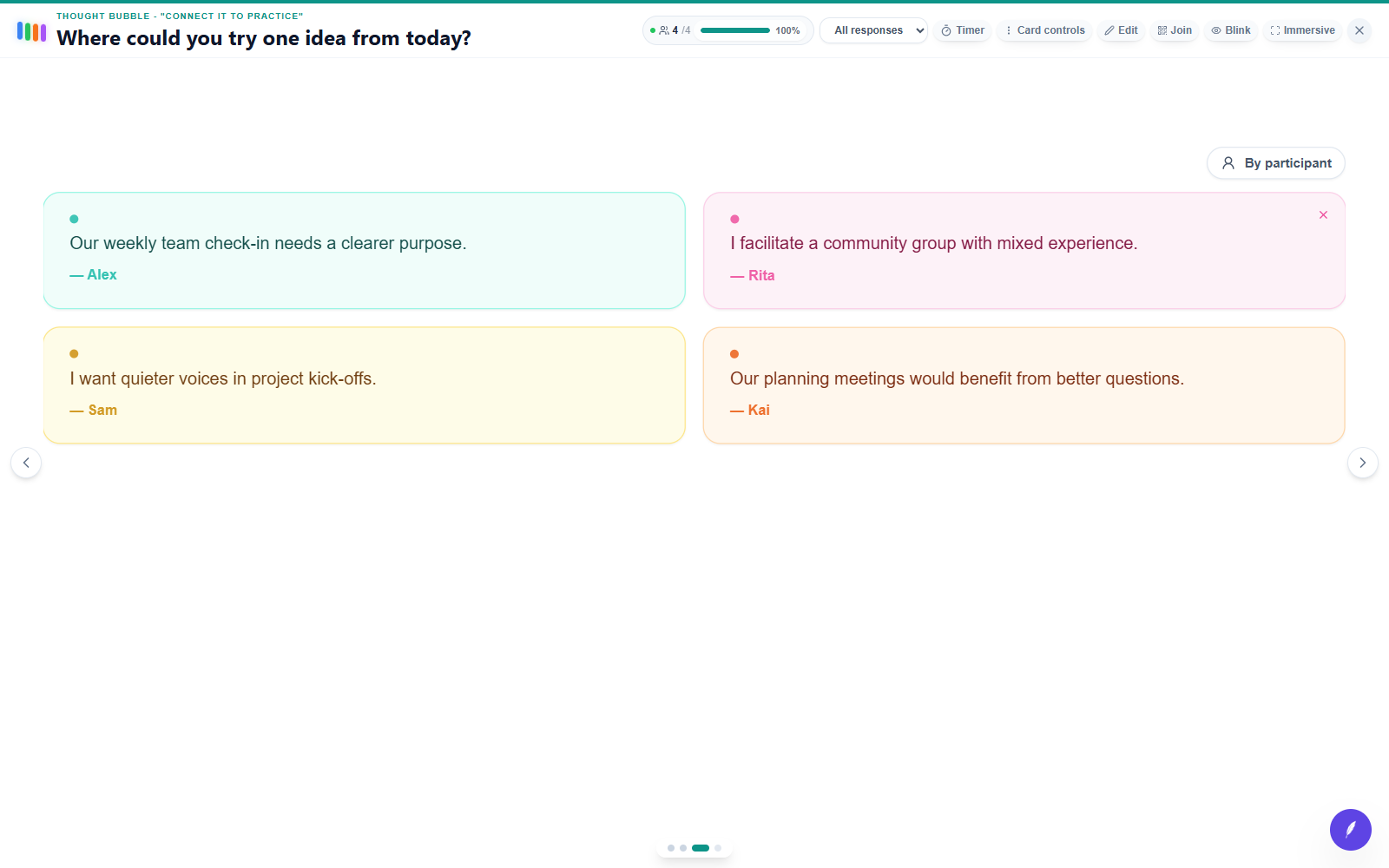
Team check-ins, project kick-offs and community meetings give the facilitator examples to work with.
Actual edauthor screens with demonstration responses. Scene artwork is illustrative.
Build early participation while generating information the facilitator can use.
Set up the activity around one clear purpose and decide how the responses will shape what happens next.
Guide participants through a visible sequence with enough time to think, contribute and learn from the emerging results.
It helps people begin contributing while also connecting directly to the session topic, relationships or intended outcomes.
Anonymous polling can reduce pressure, while paired conversation works well when the question is safe and relevant.