How long should think–pair–share take?
A focused version can take about 12 minutes, while a more analytical question may need 20 minutes or longer.
EdAuthor activity template
Think–pair–share moves learners from private reflection to small-group sense-making and then to a wider conversation. The sequence reduces pressure to answer instantly and gives quieter participants a route into the discussion.
The room is considering whether a campus should prioritise shade, cycle parking or more seating. Everyone forms a view before hearing the most confident voices.
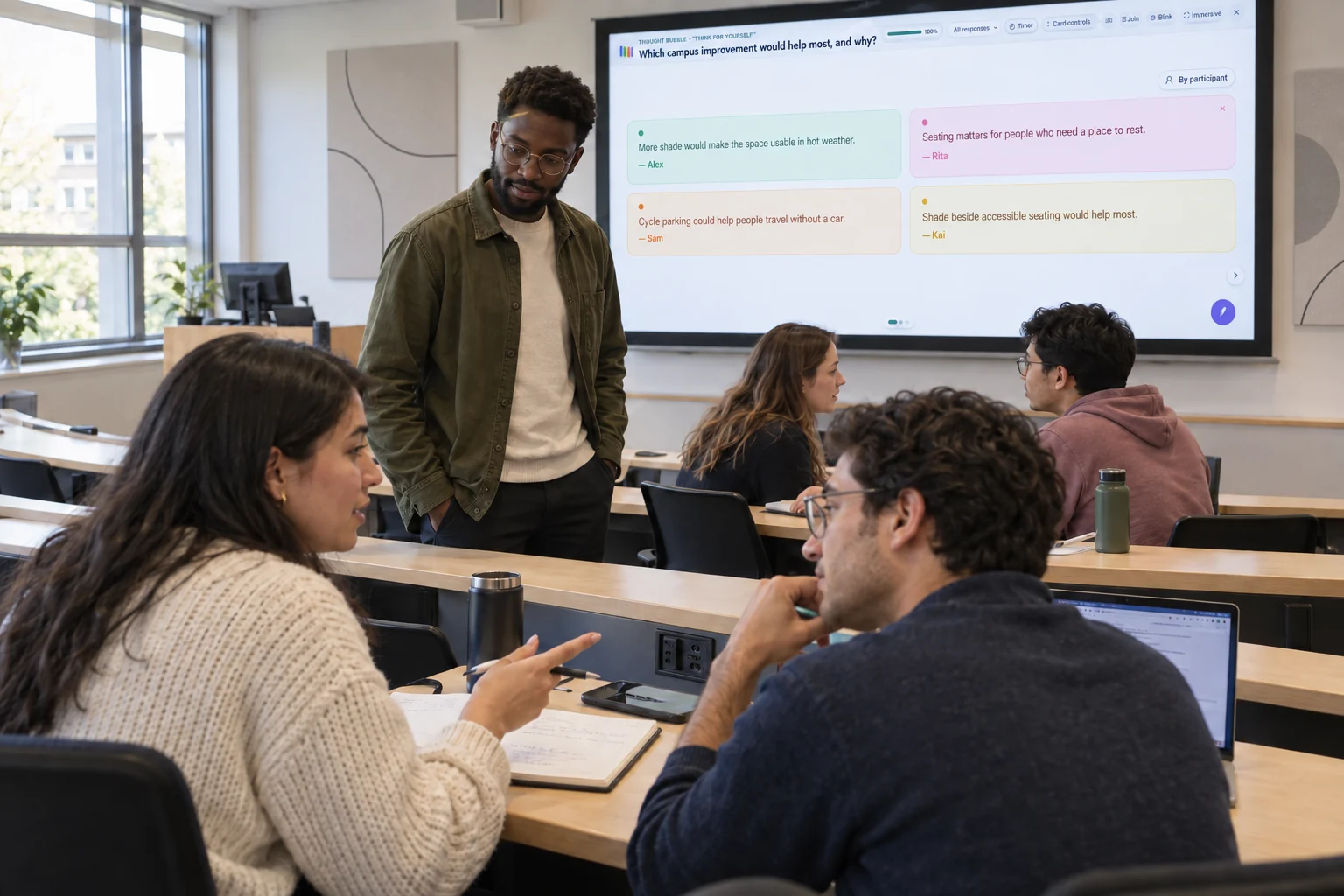
Begin with individual thinking. Ask for a reason, not just a preference, before opening the discussion.
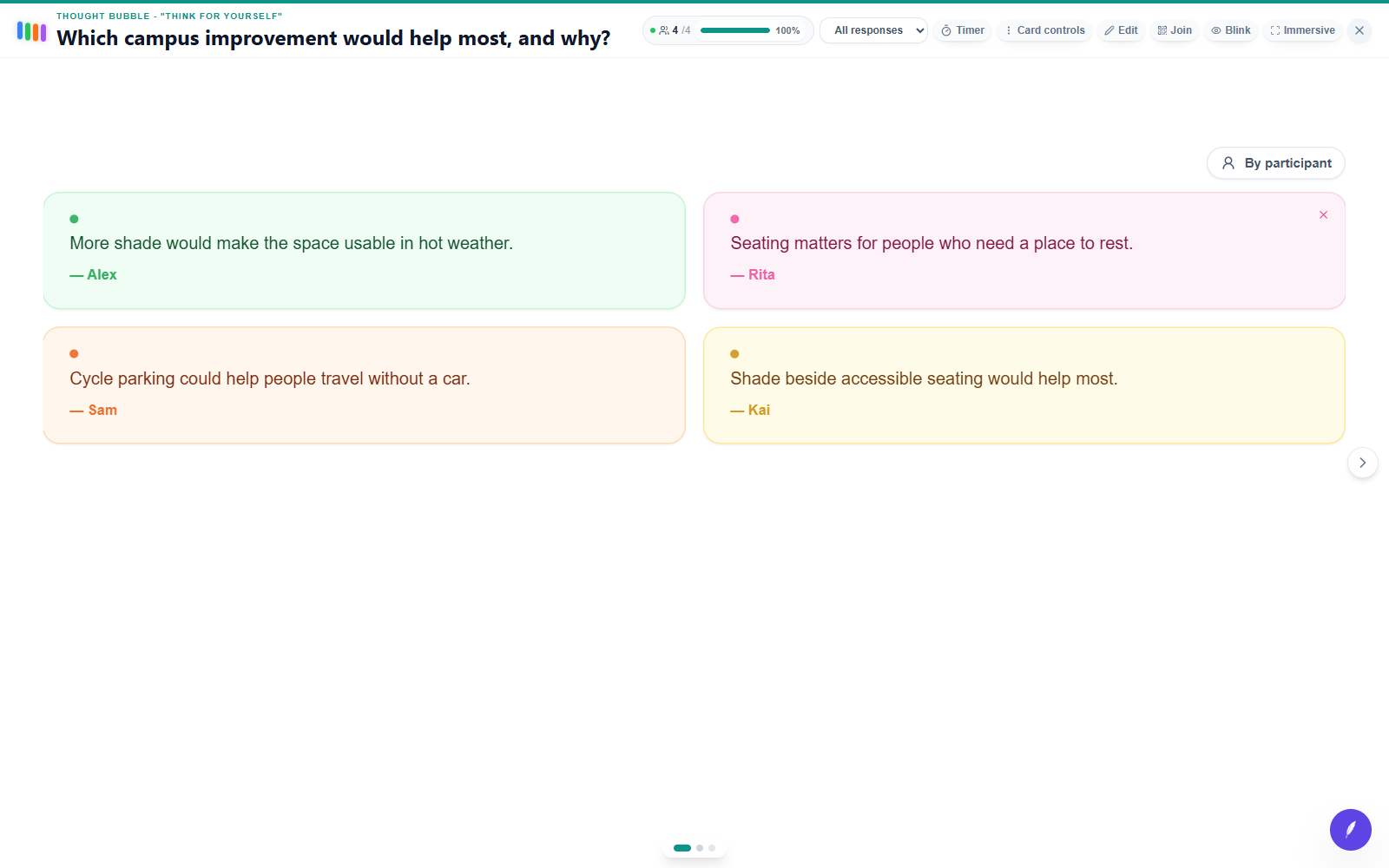
Different people notice different needs: shade, access, rest and travel all enter the conversation.
Split the participants into pairs. Ask each pair to find one point of agreement and one useful difference.
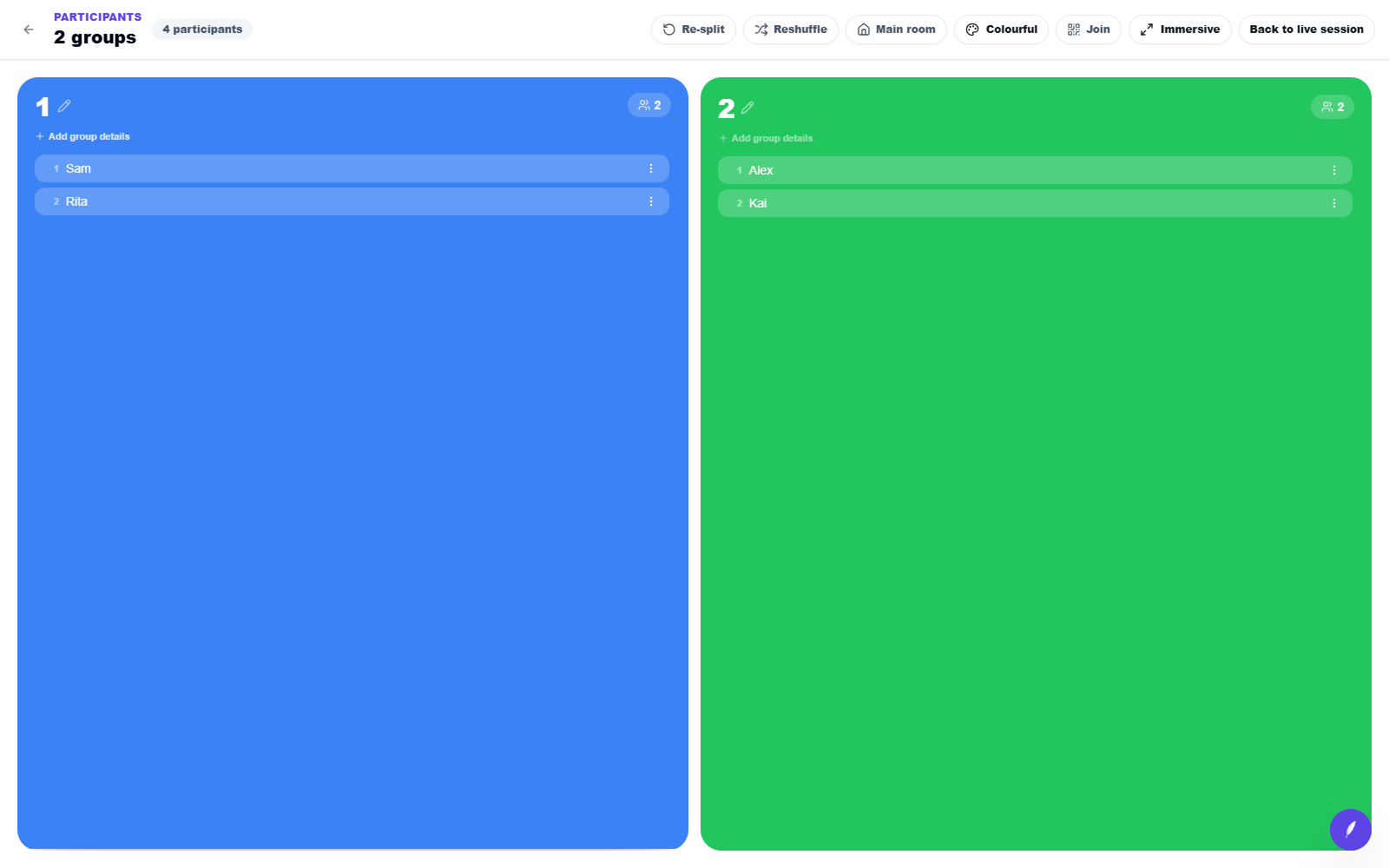
The group view makes the pairings clear. The question stays shared while the discussion becomes smaller.
Return to the main room and invite a short synthesis. Ask what changed, rather than repeating the first answer.
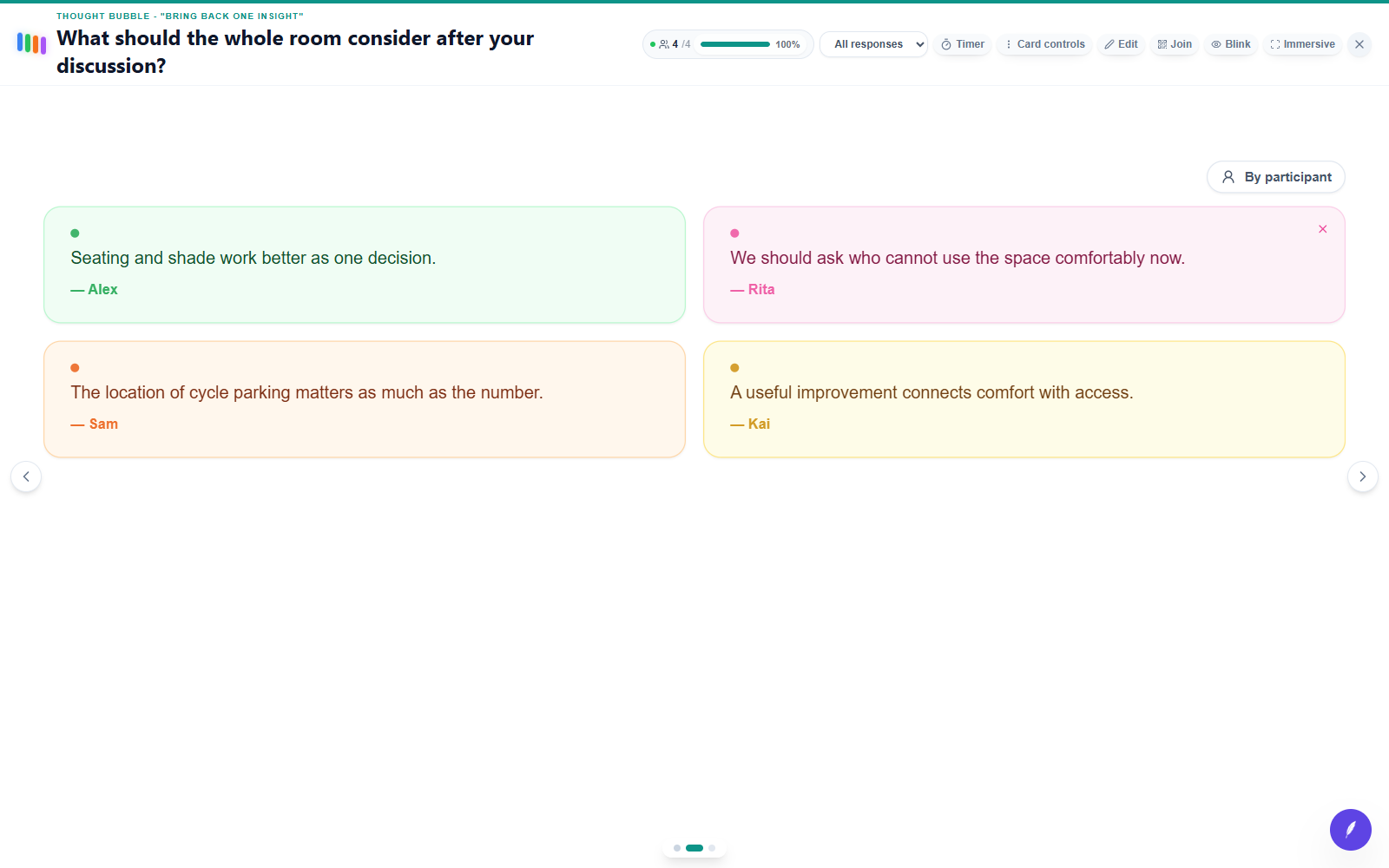
The new responses connect choices: good seating also needs shade, and access depends on where an improvement goes.
Actual edauthor screens with demonstration responses. Scene artwork is illustrative.
Give learners thinking time before discussion and gather ideas from across the room.
Set up the activity around one clear purpose and decide how the responses will shape what happens next.
Guide participants through a visible sequence with enough time to think, contribute and learn from the emerging results.
A focused version can take about 12 minutes, while a more analytical question may need 20 minutes or longer.
Yes. Digital individual responses and group submissions make it possible to surface patterns without hearing verbally from every pair.